Category Archives: bento

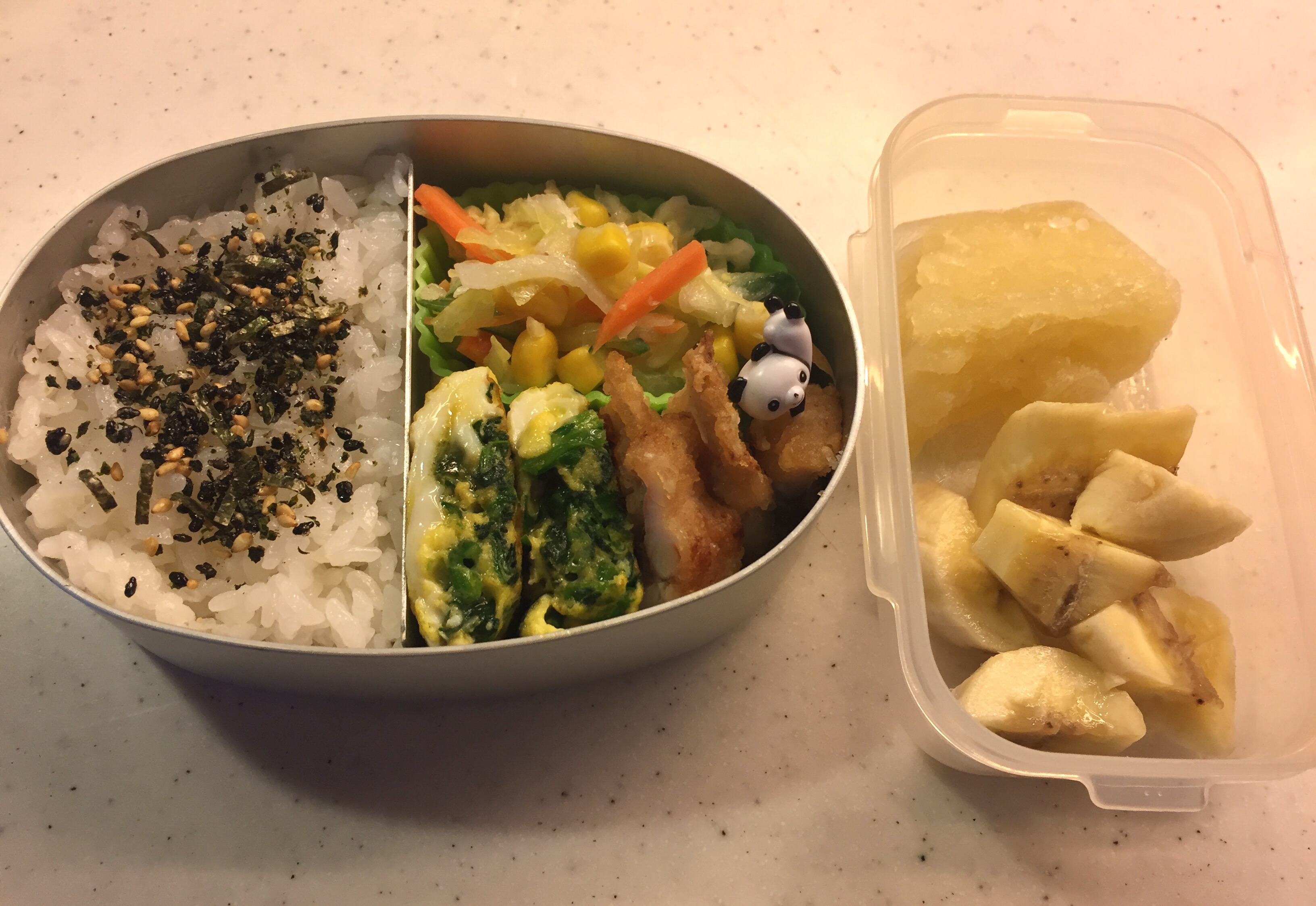
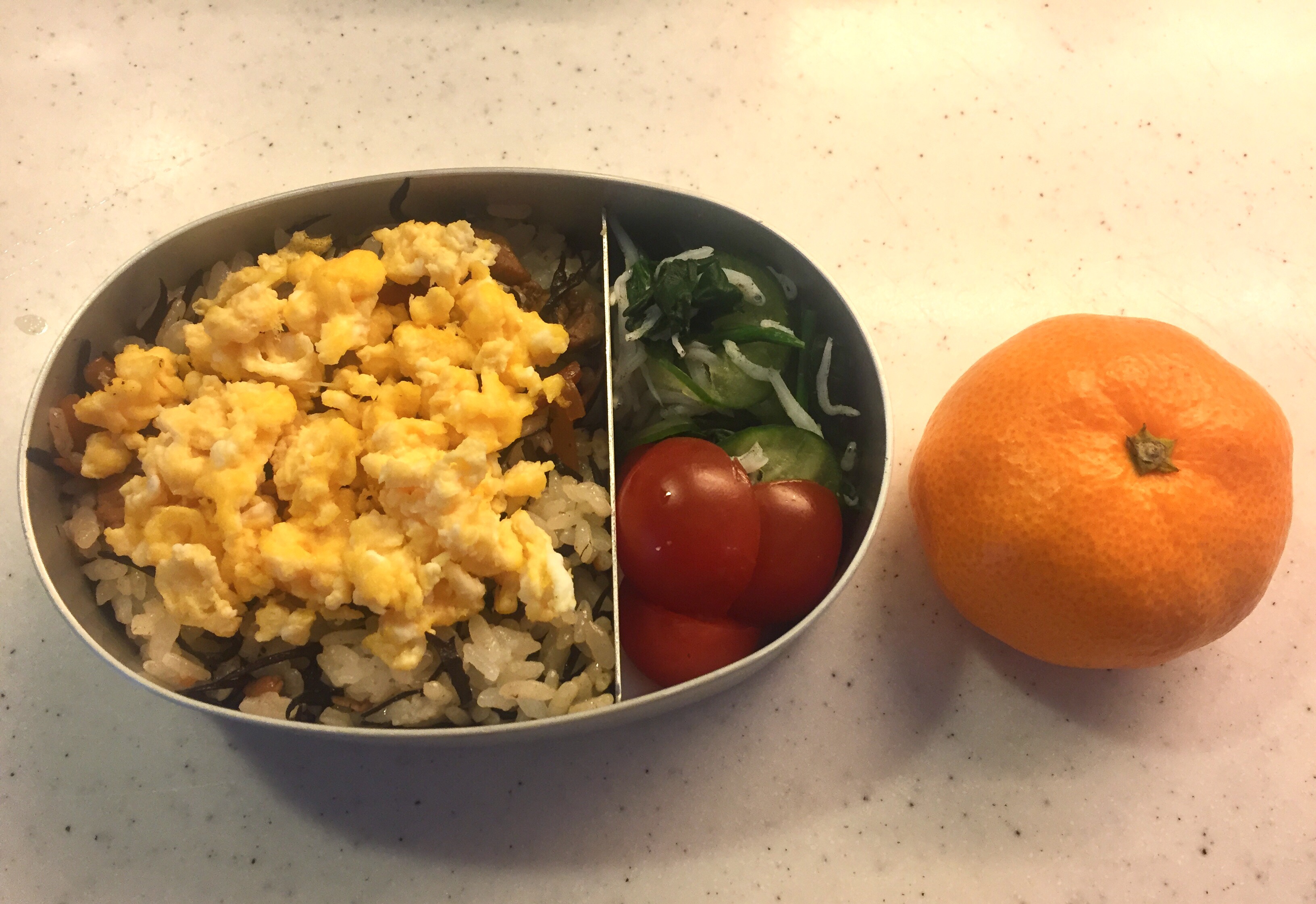
Kindergarten bento – Fried aji (24/Jan/17)

Menu: Fried aji (horse mackerel), Sliced veggie salad, Spinach omelet, Rice with furikake sprinkle

Apple mousse & banana for dessert

Fried aji (horse mackerel) is one of the very useful dishes for bento. Today I marinate the filets of aji with sake, soy sauce and mirin (1:2:2 proportion) with ground ginger, tossed the marinated filets into katakuriko (片栗粉, potato starch) and shallow fried it. You could also cook the filet like you make cutlet, and serve them with Wooster sause. 

It’s easy to make and tasty!

Kindergarten bento – Bunny apple (23/Jan/17)

Menu: Kajiki nimono (simmered sword fish), Cucumber sticks, Sautéed spinach & bacon, Cherry tomato, Boiled egg

Bunny shaped apple for dessert 

After the bento today, my clever daughter asked me not to cut out the apple in bunny shape anymore, because the apple skin contains a lot of vitamin c and very healthy. 

Where did she get such information? It wasn’t from me and certainly not from my nutrition-oblivious husband. She is developing her own world view it seems!

Kindergarten bento – Diagonal attempt (20/Jan/17)

Menu: Hamburger steak (with tofu inside the pâté), Tofu omelet, Steamed broccoli, Cucumber sticks, Cherry tomato, Rice with furikake sprinkle

Strawberries & banana for dessert

For a change, I packed my daughter’s bento with a diagonal division. I’ll even teach her the word “diagonal” later today as she must’ve noticed the difference when opening the cover at lunch time. This, we call “isseki nichou (一石二鳥),” killing two birds with one stone.

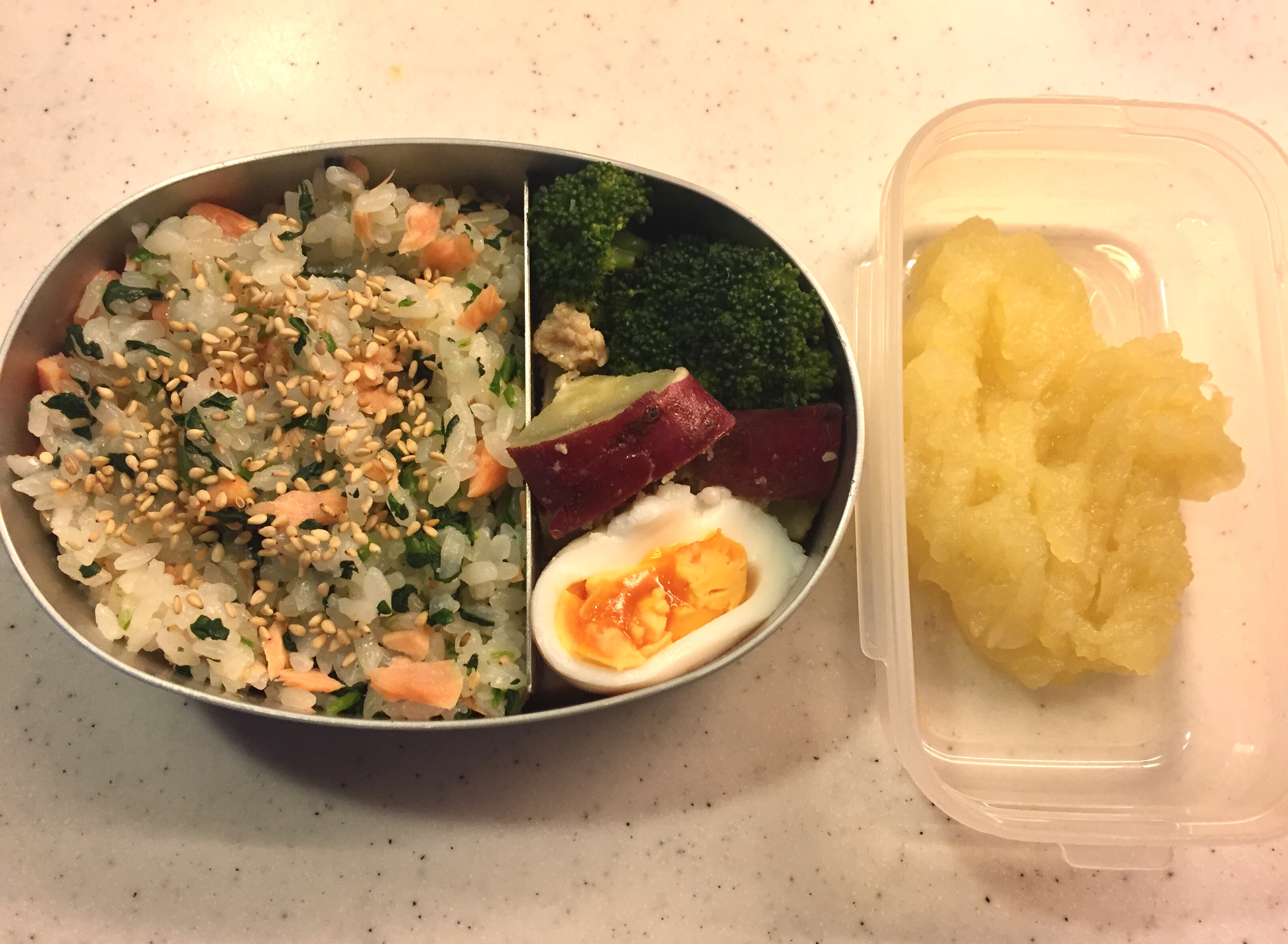
Kindergarten bento – Exploded boiled egg (19/Jan/17)

Menu: Boiled egg (exploded and hence deformed while being boiled), Grilled salmon & boiled chopped spinach mixed in rice, Steamed broccoli, Steamed sweet potato mixed with chicken soboro crumble with dash of olive oil

My daughter’s favorite apple mousse for dessert

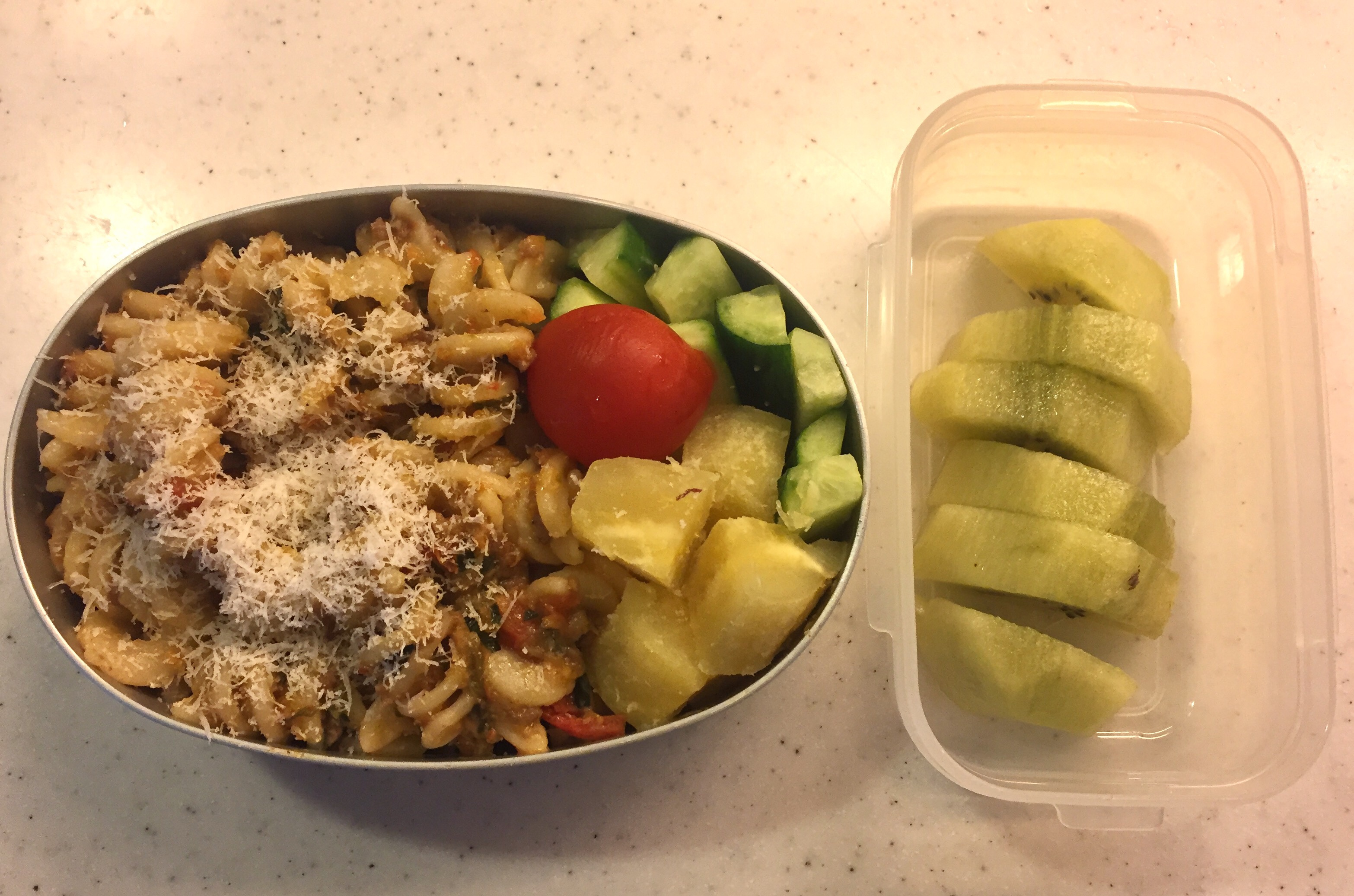
Kindergarten bento – Cheese on top (18/Jan/17)

Menu: Fusilli bolognese with grated Parimiggiano Reggiano on top, Steamed sweet potato, Cucumber sticks, Cherry tomato

Kiwi for dessert

The grated cheese on top of the pasta. By the request of my daughter’s class teacher, the graceful Miss N.

To be honest I prefer putting the cheese separately so that the amount of cheese can be adjusted as I eat. Like mother, like daughter, our four year old also likes to have a control over this kind of thing. At home she loves scooping the fine powdery cheese with a small spoon and sprinkle it as she shakes her entire body. And naturally, once for our daughter’s bento, I put the grated cheese in a plastic wrap, twisted the top and placed it on the side of the pasta, expecting her to enjoy  sprinkling the cheese by herself as she ate. But according to Miss N, a disaster apparently happened that day. Our girl’s clumsy fingers bursted the plastic wrap open, spreading the whole grated parmiggiano around her neighborhood… Miss N told me that day as a matter of factly that the school, focusing highly on building up children’s self-confidence, believes that the cheese should be pre-sprinkled on top of the pasta going forward. As diligent as I am… voila! The cheese, is now on top of the pasta.


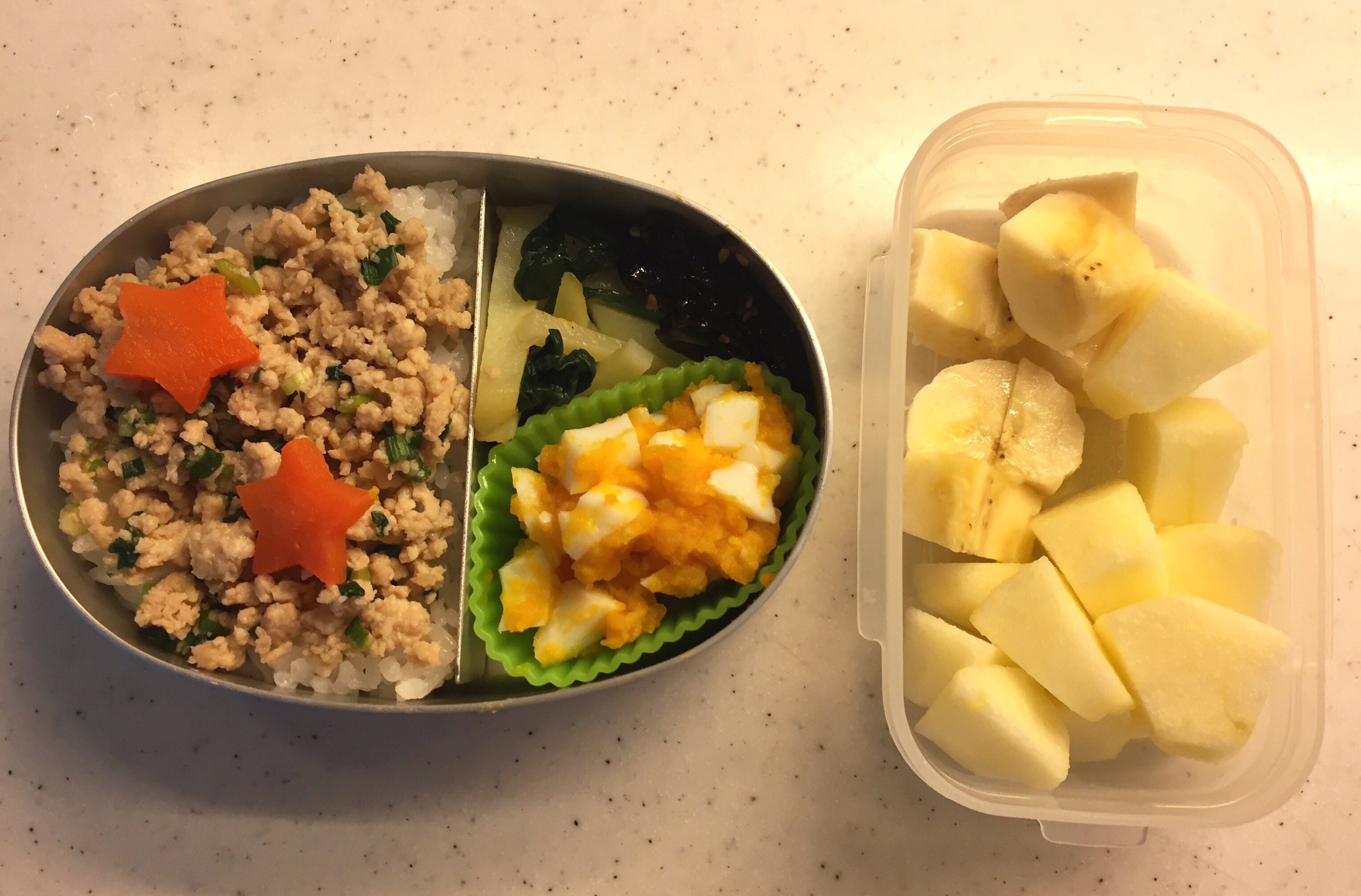
Kindergarten bento – Small additions, big difference 17/Jan/17)

Menu: Soboro-don (with additional chives and star-shaped steamed carrot), Pumpkin & egg salad, Stirfried spinach & potato slices

Apple and bananas for dessert


My usual, ordinary looking chicken crumble soboro was nicely transformed by adding some chopped chive (thanks to a tip from my good friend Y) and two small slices of star-shaped steamed carrot. It makes a whole lot difference in its taste, texture and colour. When my daughter opened the bento for lunch today, I hope its lively appearance lifted up my daughter’s whiny state of mind from this morning a bit!

Kindergarten bento – Frozen sawara (13/Jan/16)

Menu: Grilled Sawara (Spanish mackerel) in saikyo-miso, Cherry tomato/broccoli omelet, Green beans, Stewed chicken & veggies

Strawberries for dessert

Today’s Sawara fish came from our freezer. I just threw it into the fish grill frozen, and after 8 minutes or so, it revived itself to this beautifully golden brown grilled filet (and admittedly a bit burnt as well…). Marinated frozen fish is highly useful for my daily bento preparation, and I always keep a few filets in our freezer. The downside is the washing up the fish grill afterwards… Saikyo-miso marinade contains sugar and thus tend to get burnt quite easily, especially when you are multitasking and not paying good attention to your fish grill. Today was no exception, and I had a joy of scrubbing the stainless steel fish net.

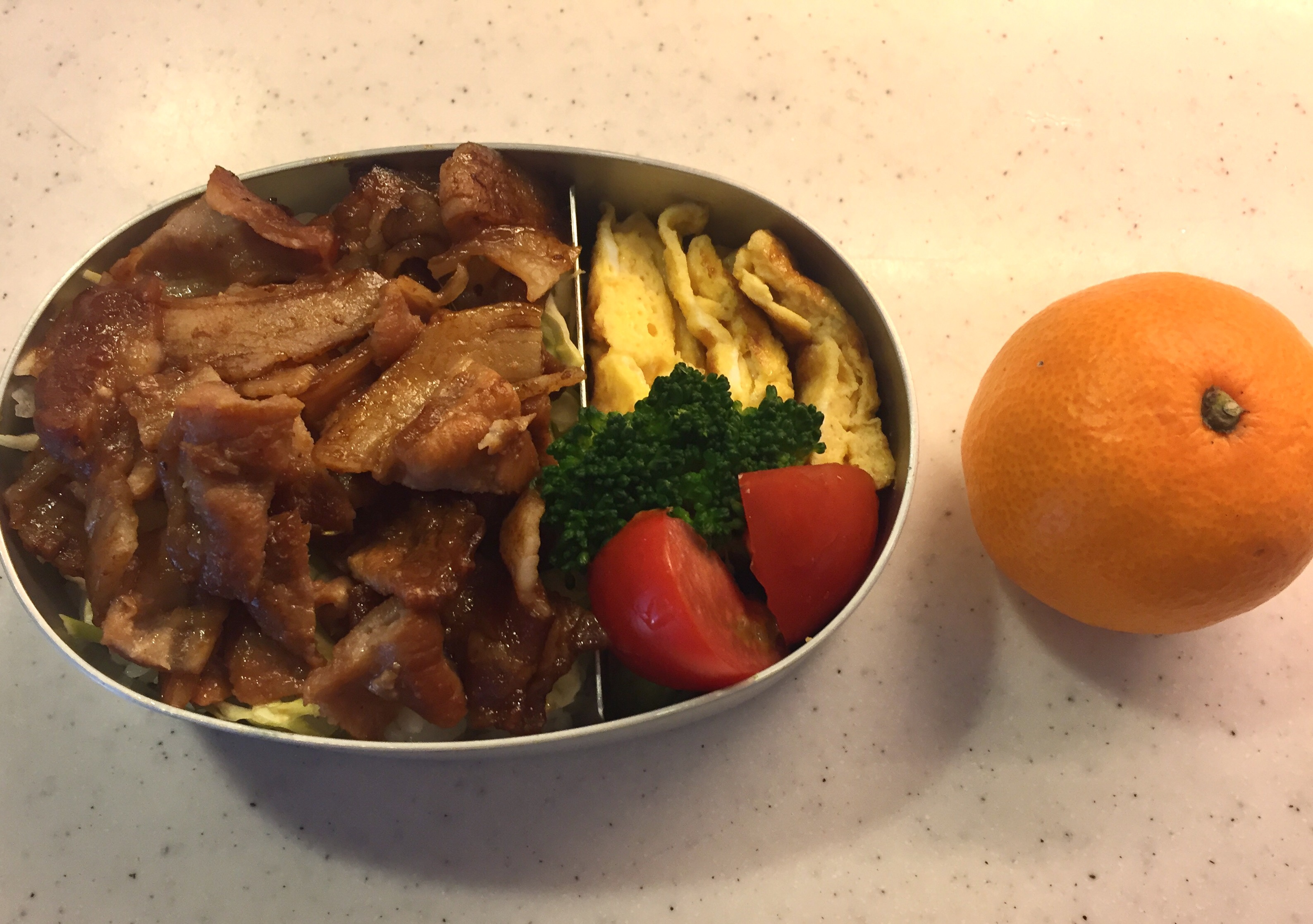
Kindergarten bento – Nikudon (12/Jan/17)

Menu: Nikudon (pork on rice) with sliced cabbage, Simple omelet, Steamed broccoli, Tomato

Mandarin mikan for dessert

The first kindergarten bento of the year starts with this blog’s most popular recipe, nikudon.

My daughter asked me this morning not to peel the mikan skin. She said, “I’m four (years old) now and can do it on my own!”

Well, a great start of the new year, I’d say😉

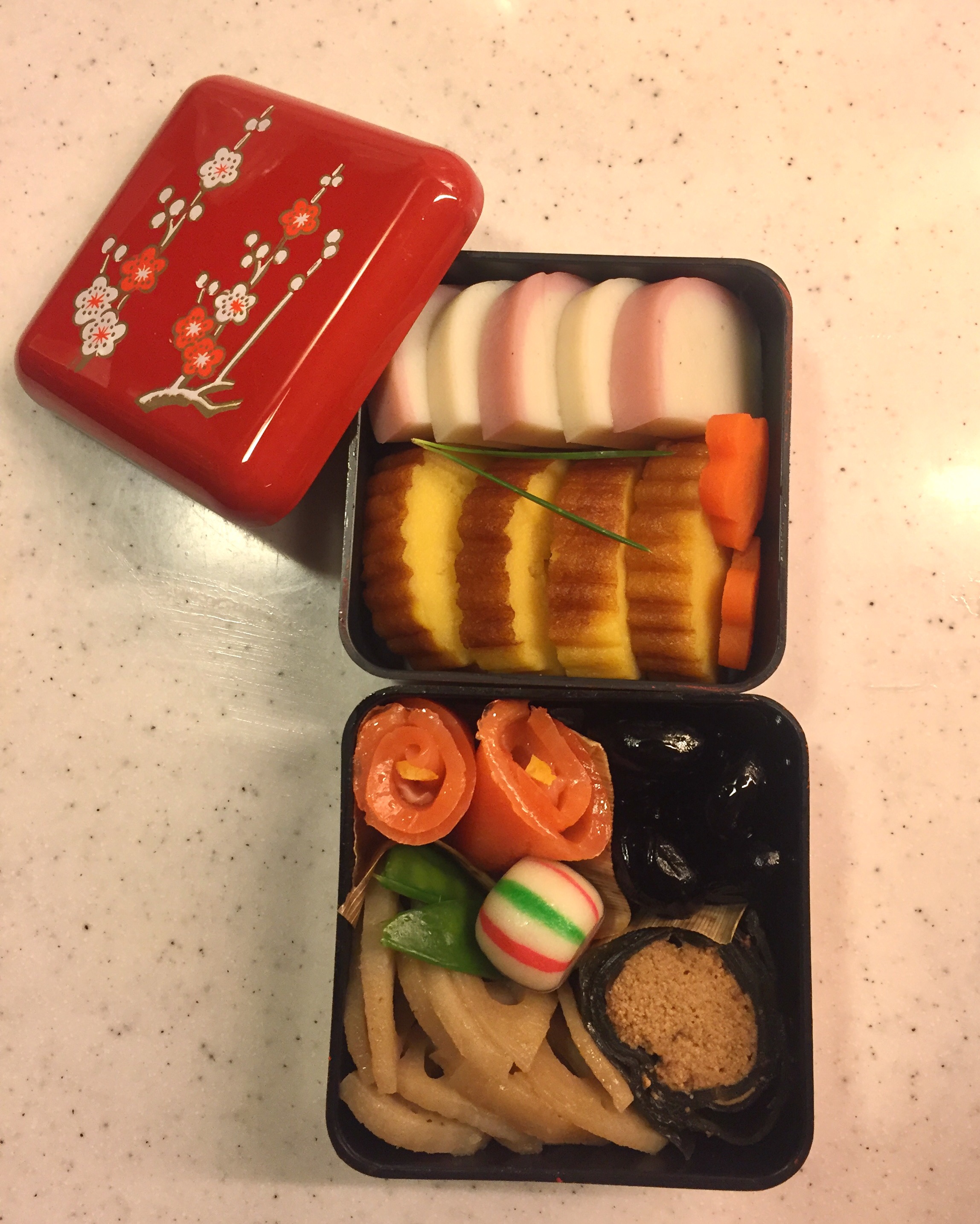
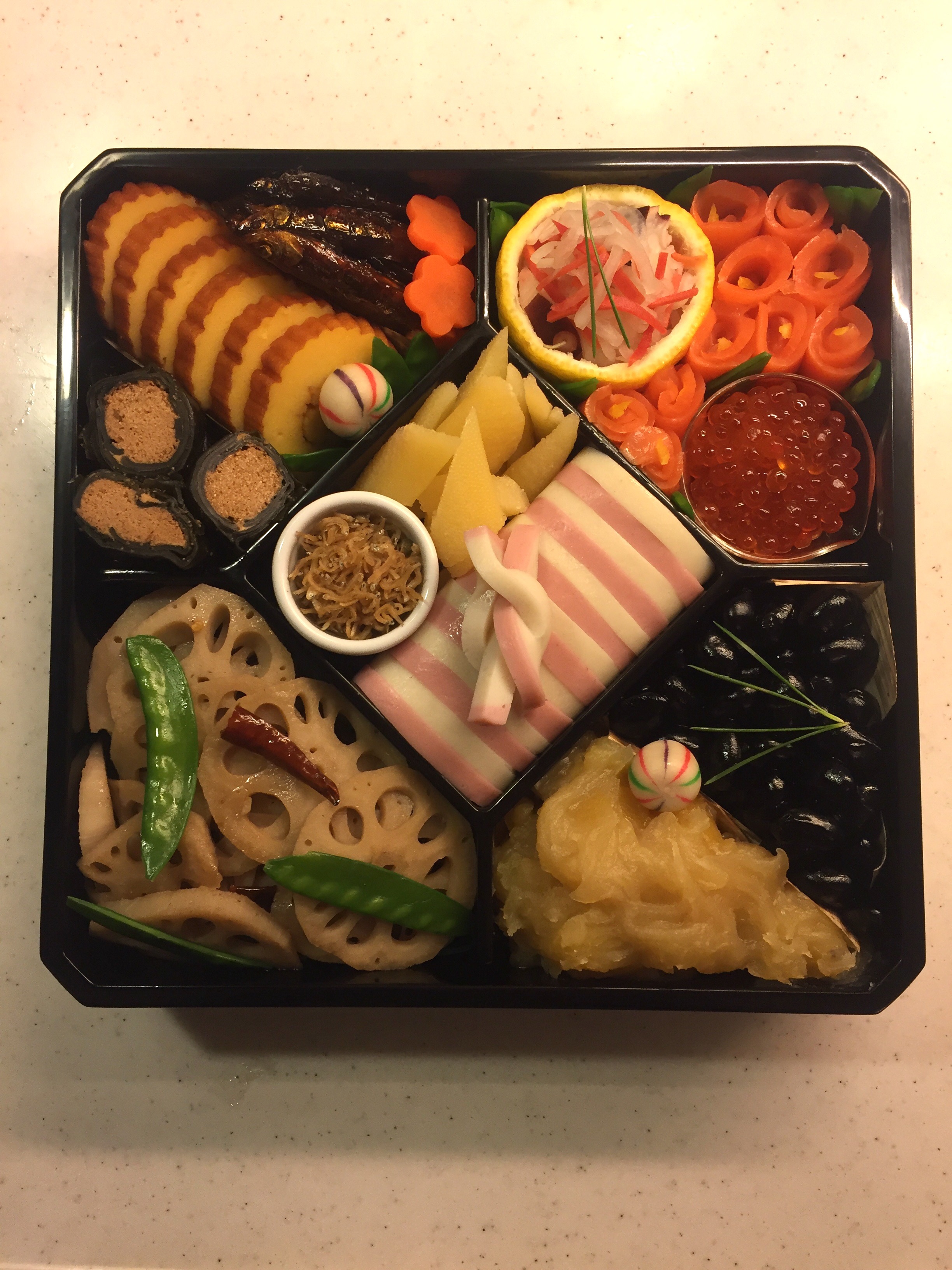
Happy New Year bento – Osechi (1/Jan/17)

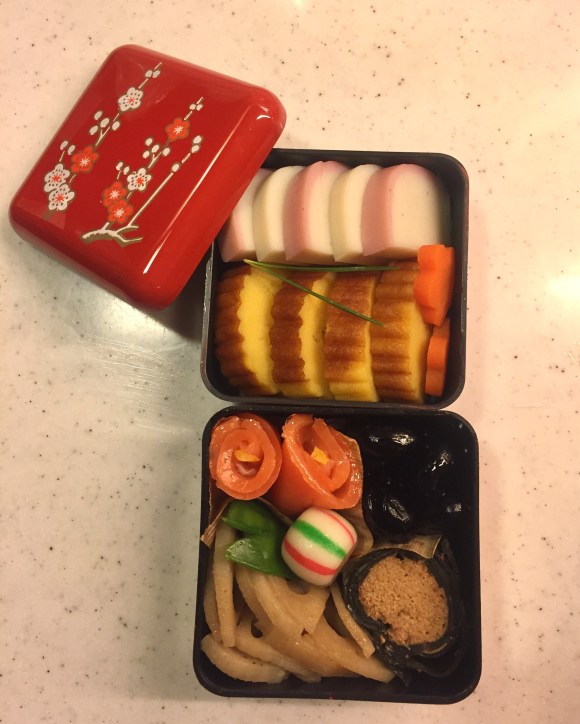
For the kids

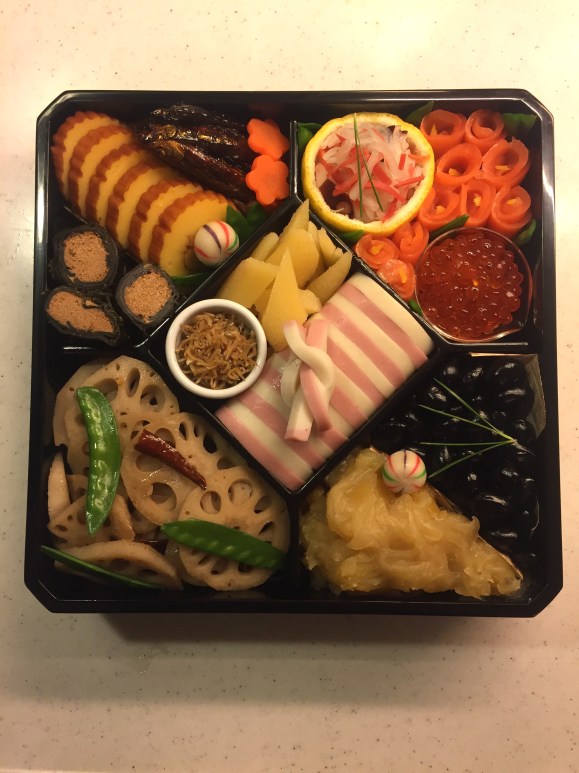
…and for the grown ups
Happy New Year!

Did you know that in Japan what we eat on the first day of the year is bento? This has a special name, “Osechi.” Actually I didn’t have any idea why it’s called that way, so I did a quick research. Apparently Osechi is a simplified expression for “Osechiku(御節供)/ Osekku(お節句),” which is the term to describe special food prepared to appreciate the harvest.

New Year’s Day, usually referred as “Oshogatsu(お正月),” is one of the most important days of the year for Japanese people and is celebrated among family members and close relatives. It is a formal event involving proper table setting, rather than a casual fun party that is common in the Western society. I always explain to my Western friends that Oshogatsu in Japan is like Christmas in Europe and Thanksgiving in North America. We (are forced to) stay at home (if you are young and live on your own, you usually go back to your parents’ place to celebrate), have the celebration within the family (quite unusual to visit your friends on the New Year’s Day), and repeatedly eat & rest. We (usually women – no offense, it’s tradition…) prepare Osechi dishes a few days in advance so that we don’t have to work so much on the New Year’s Day itself. Osechi dishes mostly consist of preserved food and hence can last for a week or so.

Traditionally, every dish we put in Osechi has some auspicious meaning or appearance. For example, the combination of red (pink) & white is the colour of celebration in Japan. Kamaboko, the red & white fishcake slices in the centre of the box above, are the symbol of rising sun and is considered to be the most important dish for Osechi. Also the colour of yellow & gold is the sign of prosperity – see the creamy chestnuts in the bottom right corner, which is compared to the golden treasure. The egg cake roll in the top left corner is the sign of preciousness, signifying the hand scrolled documents where we used to store important information. Black beans apparently are the symbol of health. Kazunoko, the herring fish roes, also yellow & gold in colour in the centre of the box, are the sign of prosperity (for descendants), etc. etc. And adapting to the modern living, most of these dishes can be purchased nowadays at any grocery stores. As for me, I cooked a few dishes but bought some as well. All I had to do was to pack everything beautifully, gorgeously and efficiently, which, I’d like to emphasize, requires some skill 😉

This year, my parents joined my Dutch husband, our daughter and myself for the New Year’s celebration at our small Tokyo apartment, and our small family invited our very close friends, a lovely Portuguese family who live in our neighborhood in Tokyo, so that they could have a glimpse of our unique tradition. Eating Osechi all together and having a laugh with our cross cultural conversations, we were able to recreate this special, ceremonious feeling of Japanese New Year that we used to have with my grandparents back in good old days. It has become one of the most memorable Oshogatsu for me this year, sharing it with people I love with my first ever hand-packed Osechi.


References:

Kibun:

https://www.kibun.co.jp/knowledge/shogatsu/osechi/iware.html

Ii Nippon:

http://ii-nippon.net/日本の風習/1166.html