Monthly Archives: June 2016

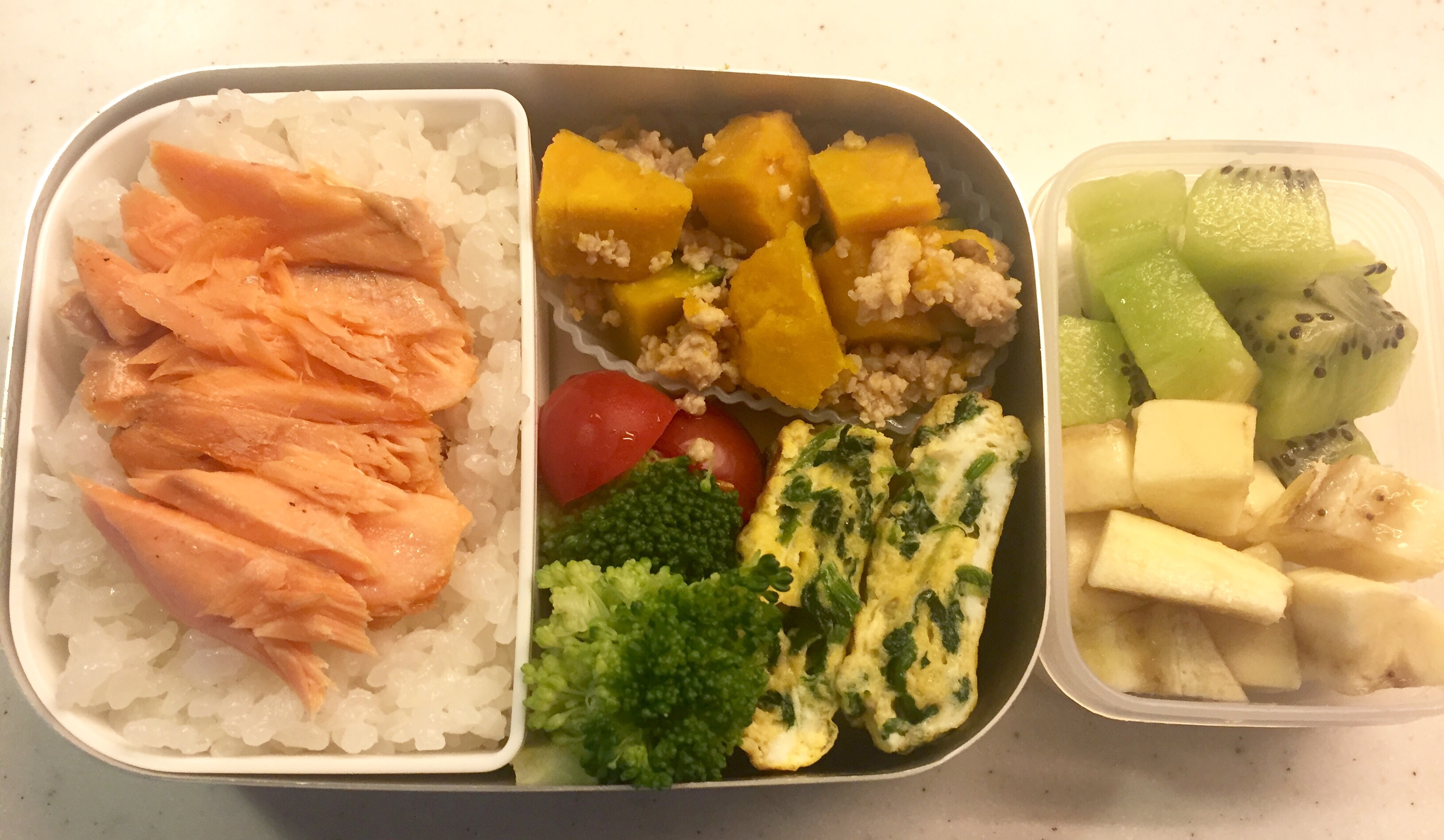
Kindergarten bento – Spinach goma-ae (14/Jun/16)

Menu: Spinach goma-ae, simmered beef (dinner leftover), Okura/tofu/bonito flake salad, Boiled egg, Steamed broccoli

Kiwi fruits for dessert


Goma-ae is the type of side dish we eat frequently in Japan. “Goma” means sesame, and “ae” comes from a verb “ae-ru” which means to mix or to toss.  

The sesame marinade is very easy to prepare. Use 2 table spoonful of sesame seeds (usually you can buy roasted sesame seeds called “irigoma/炒りごま” in any supermarket here), grind them in a spice grinder to make sesame powder (or you can simply use pre-ground sesame called “surigoma/すりごま”), mix in a table spoon of soy sauce and a table spoon of sugar. Stir the three ingredients well, and the marinade is ready. This should be more than enough for a pack of spinach.

I usually boil spinach in boiling water (put the roots first for 10 seconds, push in the leaves afterwards and cook for a minute or so). Take the spinach out, place it under cold running water so that the boiled spinach maintains this beautiful bright green colour, and once cooled down, drain well by squeezing the water out of the spinach. Line them on a cutting board, cut into 4cm apart or so.

Then, in a bowl pour the marinade onto the spinach, toss everything quickly and coat the marinade evenly. That’s it!

You can also use green beans (15-20 of them depending on the size), or any other vegetable you like. When the portion of the vegetable is bigger, prepare more marinade, but just stick with the proportion: 2 ground sesame, 1 soysauce, 1 sugar. You can of course adjust this a bit to your liking.
Kindergarten bento – Corn omelet (13/Jun/16)

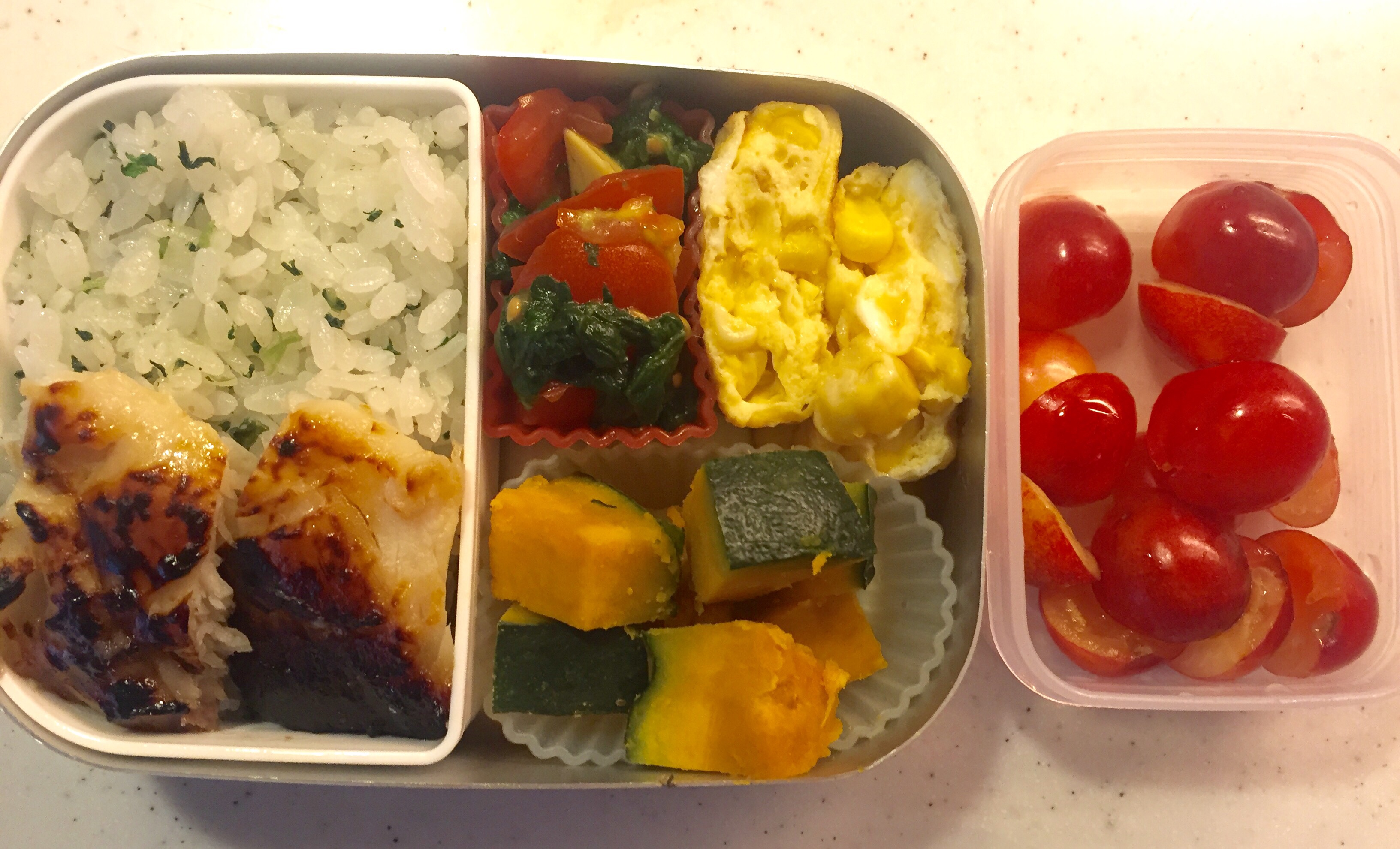
Menu: Corn omelet, Grilled sawara (Spanish mackerel) with saikyo-miso, Steamed pumpkin, Cherry tomato/Avocado/Spinach salad, wakana rice

Japanese cherries for dessert

Corns are in season. Today, I added steamed corns in an omelet (corn pieces sliced off of the core). The crunchiness and sweetness of the corns go very well with the mild taste of the egg – one of those very kids-friendly menus I’m sure.

Usually it takes 7-8 minutes to steam a large corn (with one or two layers of the skin still attached). When in a hurry, I also use microwave – in this case rinse a corn (again with the skin), wrap it around in a plastic wrap, and heat it up in 700W microwave for  3 – 4 minutes.

Kindergarten bento – pork roll (10/Jun/16)

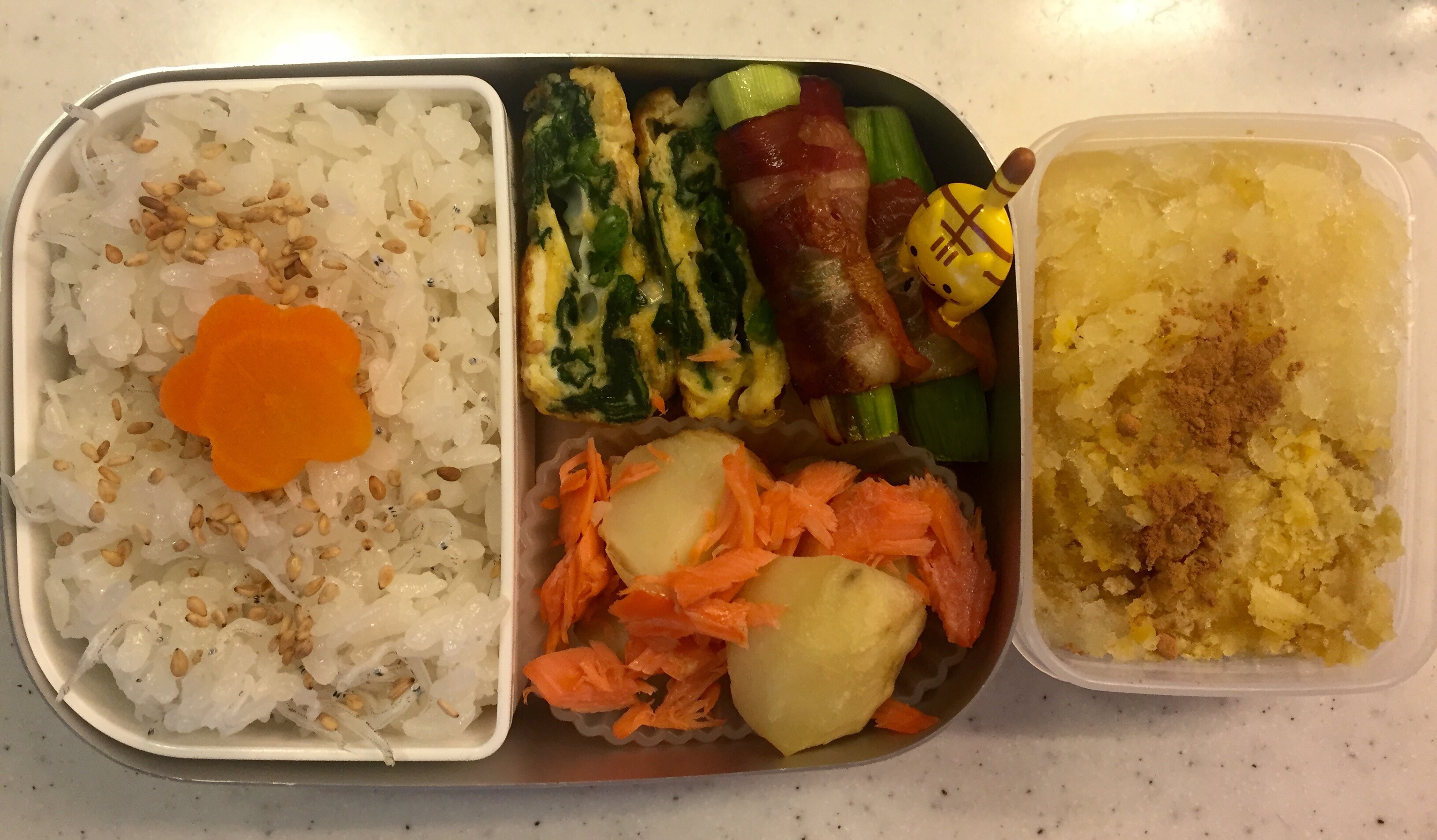
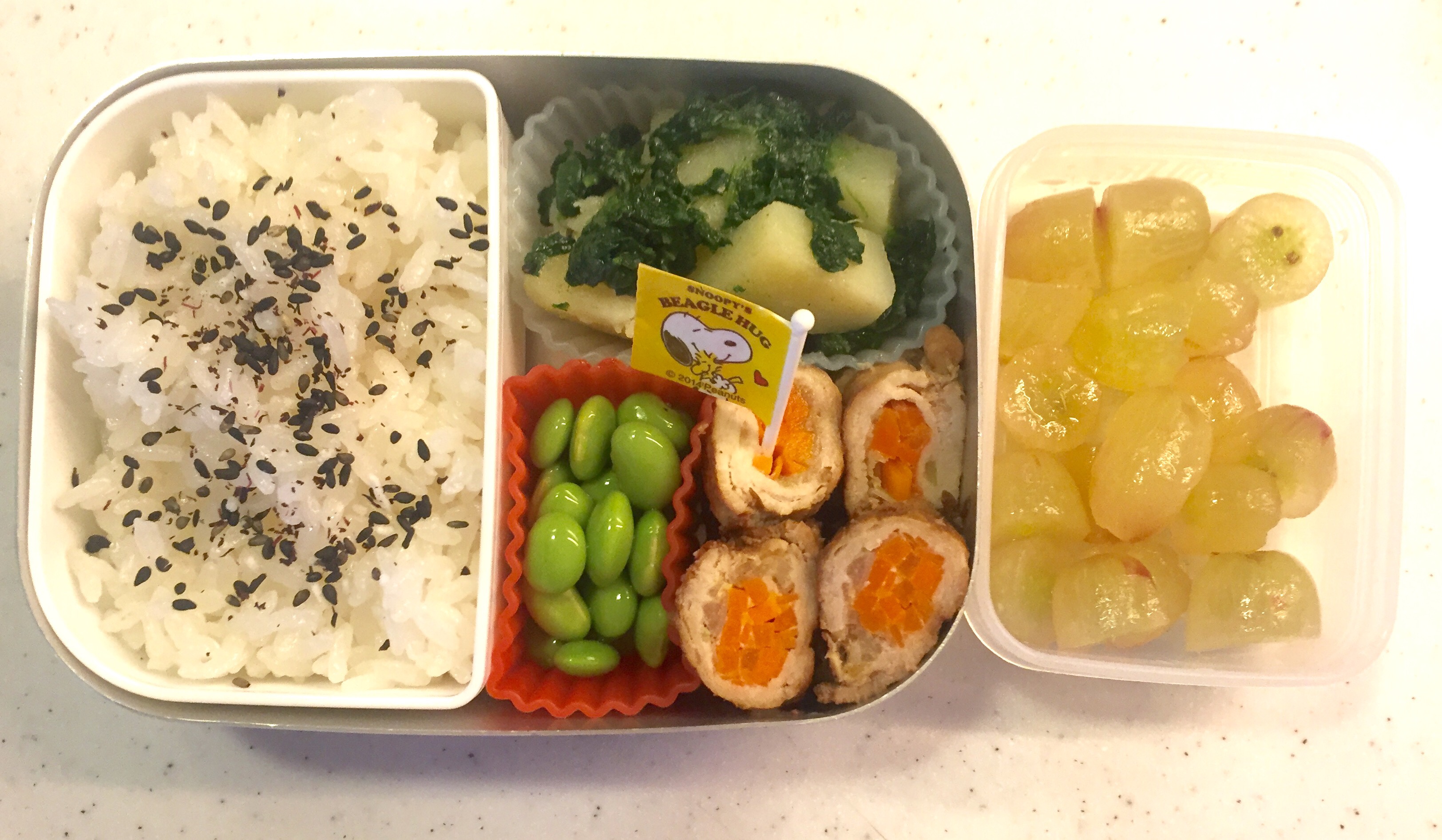
Menu: pork roll with sliced carrots and scallion (negi), boiled potato & spinach salad, edamame, goma-shio (black sesame & salt) & yukari (seasoned Japanese shiso herb) on rice

Grapes for dessert


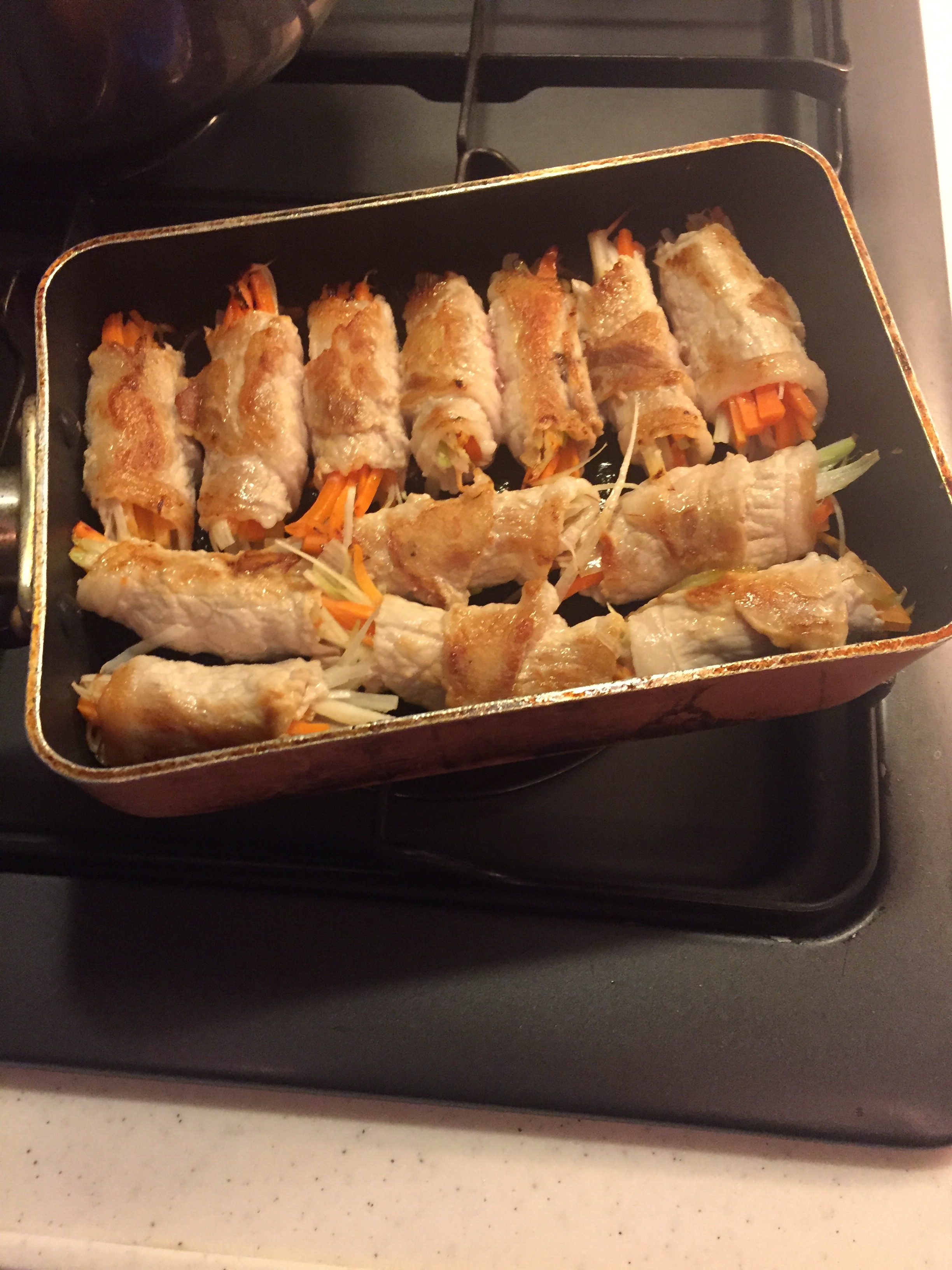
Today’s main course, pork roll, is called “niku (meat) maki (roll)” in Japanese. 

Very simple: prepare pork slices (sliced like carpaccio meat), thinly sliced carrots and scallion (negi) or any other sliced vegetable of your choice. Roll the veggies with a pork slice, and fry it in a frying pan. 
  
You can use olive oil to fry, pour white wine once the meat is golden brown for extra flavour, put the lid on, and once the meat is cooked add salt & pepper to taste. 

Alternatively, replace olive oil with vegetable oil, and white wine with sake. Once the meat is cooked add 1 tea spoon of soysauce and 2 tea spoons of mirin and toss the rolls to mix with the sauce.

Once cooked, cut the rolls in half for beautiful presentation.

Kindergarten bento – goma konbu & tarako (6/Jun/16)

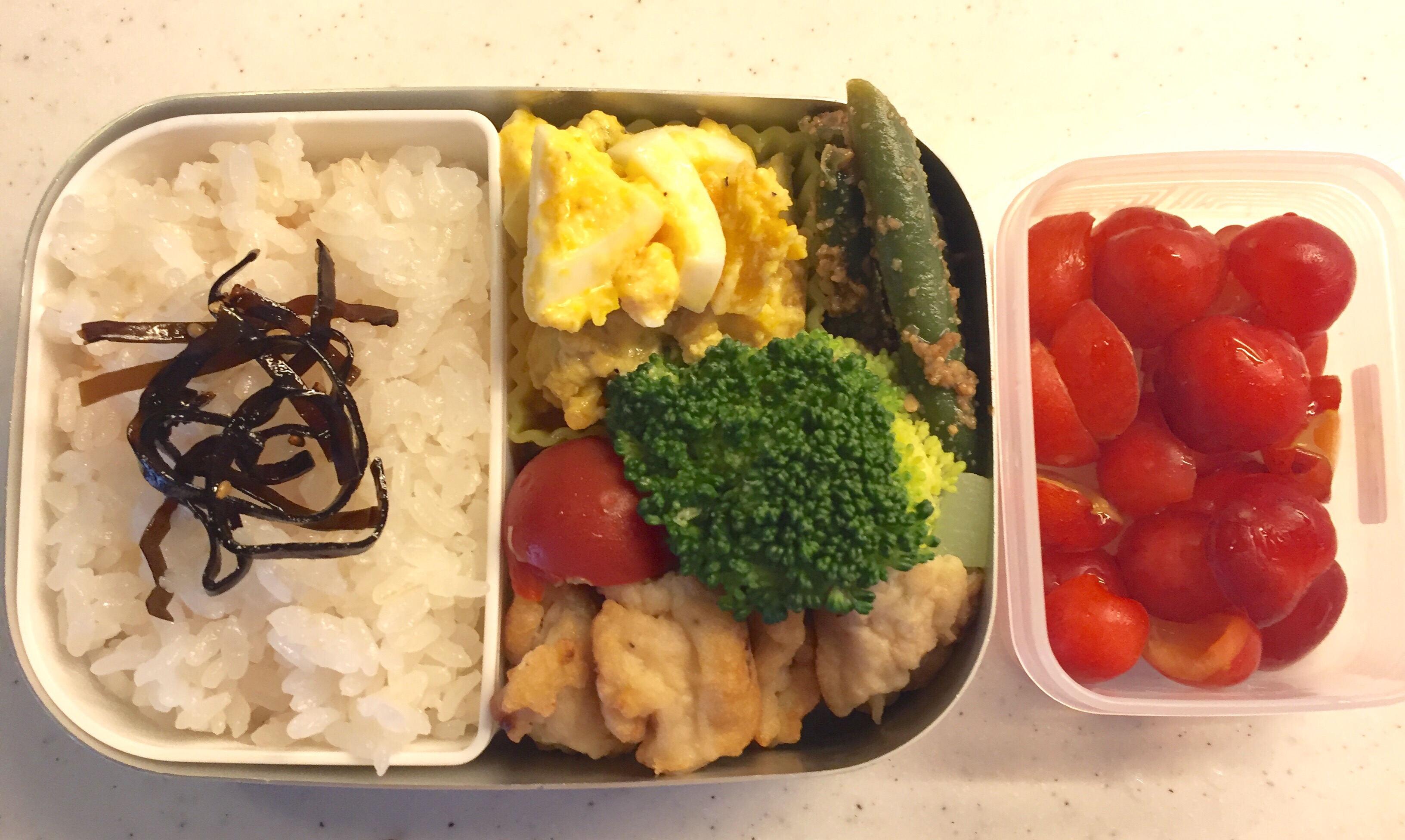
Menu: goma konbu (marinated kelp with sesame) on rice, tarako (salted roe of Alaskan pollock) in between two layers of rice, chicken tofu pâtés, green beans with sesame sauce, pumpkin egg salad, broccoli and cherry tomato

Japanese cherries for dessert  

2 new ingredients for our little girl’s kindergarten bento today; goma konbu (marinated kelp with sesame) and tarako (salted roe of Alaskan pollock).

goma konbu is marinated kelp (konbu) with sesame (goma) seeds, usually seasoned with soysauce based marinade. It tastes salty but sweet, kind of similar to teriyaki. I didn’t cook it, actually have never made one before, as it can be easily found in any supermarket. It is one of the most common ingredients for packed lunches in Japan, which always comes with rice. Similar to furikakein Japan we say it is a “friendly  match” with plain, unseasoned rice. The reaction from our daughter for this attempt? Two thumbs up!

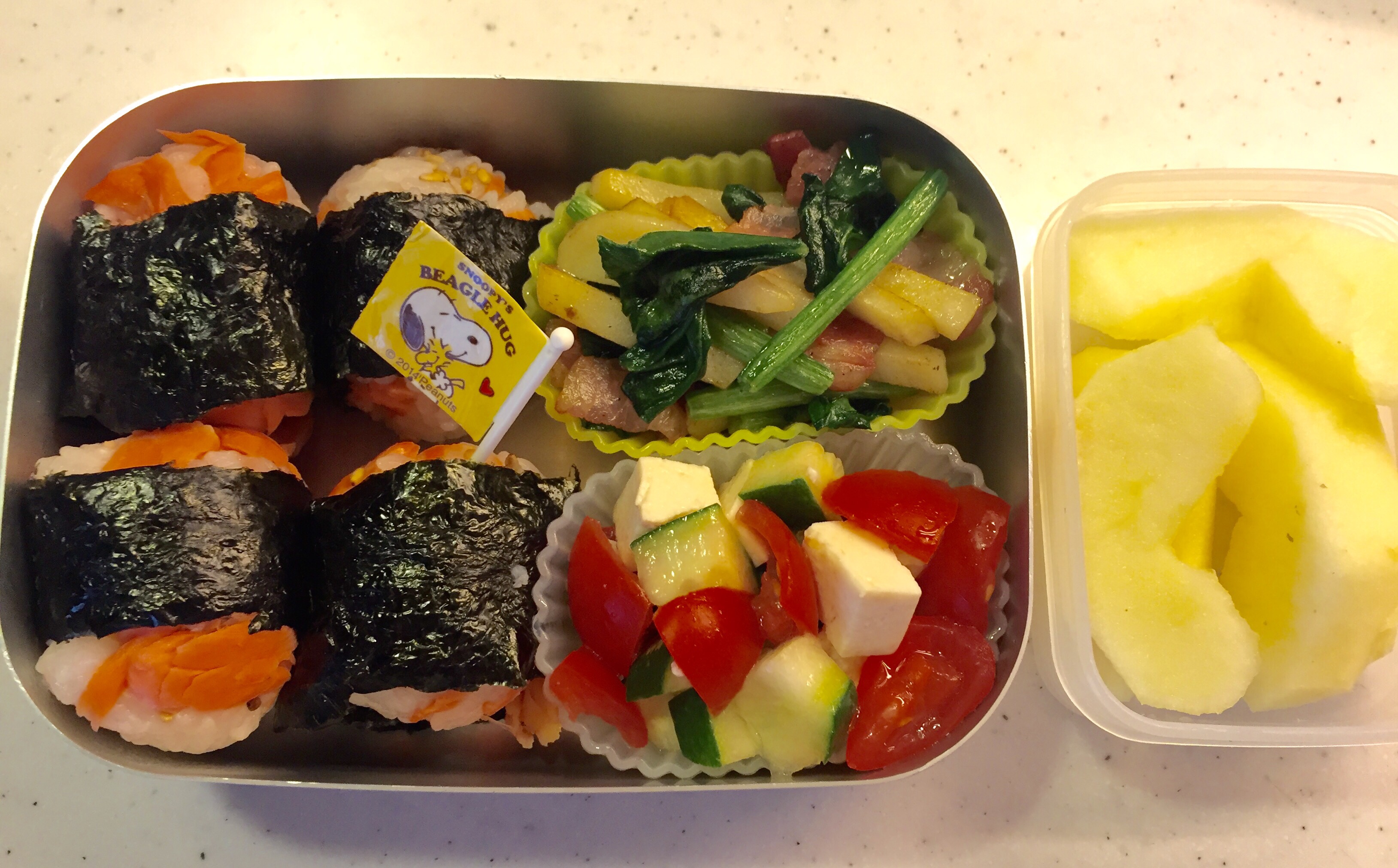
The other new ingredient I put in our daughter’s kindergarten lunch for the first time is so-called tarako, salted pinkish roe of Alaskan  pollock. The name “tarako” comes from the fish’s Japanese name, “suketou tara“, and “ko“, meaning children. It’s super fishy and salty but incredibly tasty, kind of the way Italian bottarga or caviar is. Tarako is however amazingly accessible compared to those western delicacy, and is eaten at any Japanese household on a regular basis. Its saltiness goes very well with rice, and is a popular ingredient for onigiri. For the bento I sneaked tarako in between two layers of rice, thinking it’d be too fishy if its exposed. According to our girl’s class teacher, Miss N, our daughter hurriedly closed her bento box lid when Miss N. walked past that day, but when she was asked she reluctantly admitted she couldn’t finish the rice because of the “pink thingy” in the rice. When I picked her up afterwards she very politely asked me to not put the pink thingy in the bento anymore… because it was yucky…. Hmmmm….ok… I’ll try sneaking it in some other time. It is an acquired taste, and I believe it’ll take a while for her to get used to this… 

Kindergarten bento – macaroni bolognese (31/May/16)

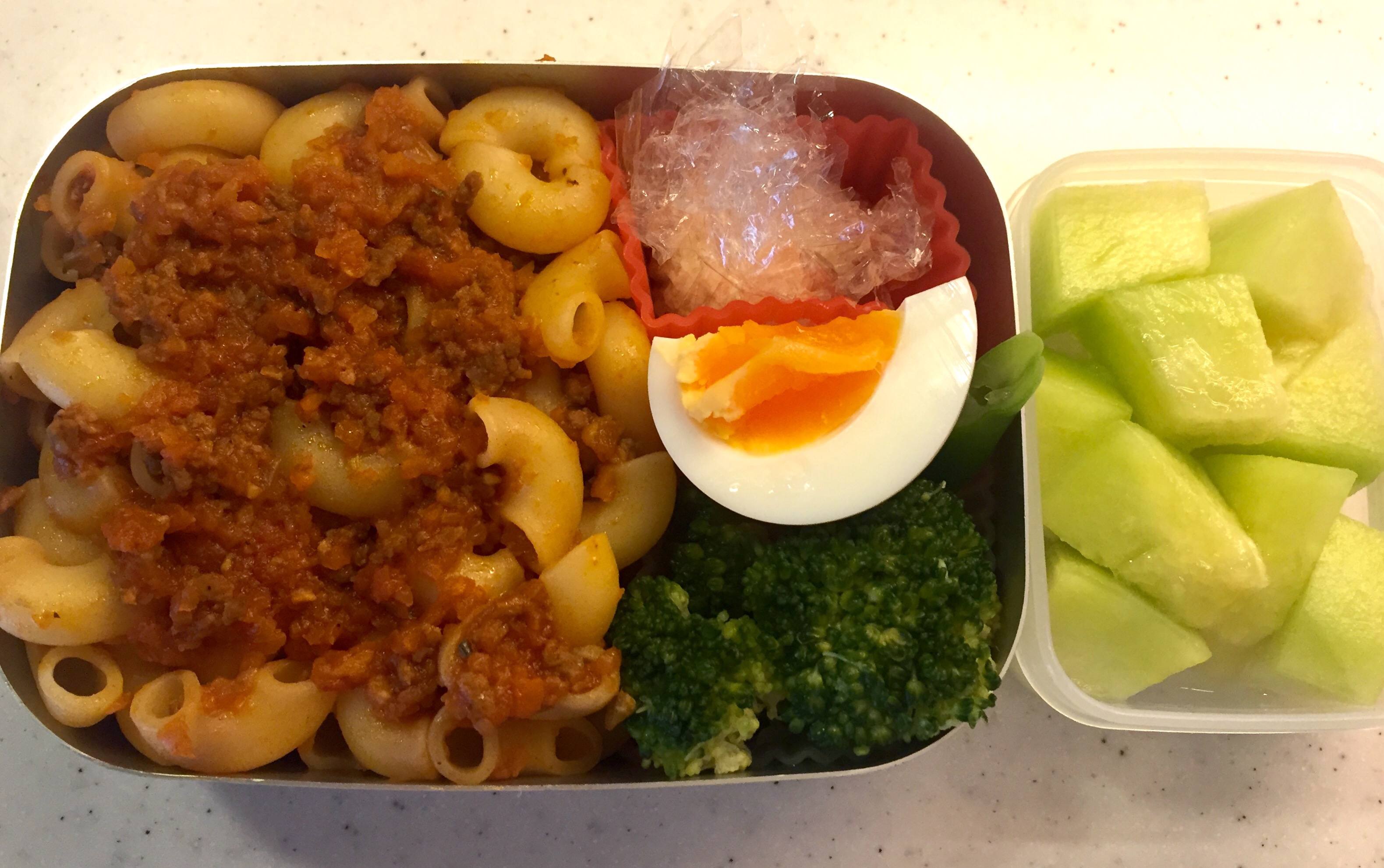
Menu: macaroni bolognese, grated parmiggiano leggiano, boiled egg,  broccoli & green beans

Melon for dessert

It’s not common to put pasta in our packed lunches here in Japan, but I did it anyway upon our daughter’s request. 

I thought the grated cheese on the side was a great idea: our little girl can sprinkle it over the pasta at the time she eats so that the cheese remains fresh – but according to her teacher she spilled all the cheese on the table and her t-shirt, leaving a huge mess…😱