All posts by Small Tokyo Kitchen

A Japanese Tokyoite loving food, design, culture and writing

七草がゆ (7 herb porridge)

in japan, we celebrate new years day just like christmas in the west. families get together, eat the new year’s feast called “おせち (osechi)”, preserved type of food such as beans, egg cakes, fish cakes, vegetable pickles, etc. which are prepared a few days in advance and nicely decorated in layered boxes. we also eat this soup called “お雑煮 (ozouni)”, which in the area where i’m from is usually bonito fish based soup with chicken, raddish and carrots, always served with “お餅 (omochi)”, sticky rice cake.

this year we were in japan over the new year’s period, so we had my parents over at our place and had the new year’s feast with them. to my dismay however, due to all the preparation & excitement for the new year’s day, i totally forgot to take photos of this great feast – dah!!!

so here i present what we eat 7 days after the new year’s day (so 7th of january), which is called “七草がゆ (rice porridge with 7 different kinds of herbs)”.

traditionally we eat this porridge to let your stomach rest after the continuous big feasts over the new year’s holiday. it’s completely vegetarian (vegan actually) with natural ingredients and the taste so soft for your stomach (just used salt to taste). it is good for digestion as well.

after a bowl, the taste gets a bit blunt, so we can put some topping over it, and this time i had raddish pickles with yuzu citrus, bonito fish flakes with soy sauce, and some mitsuba (trefoil) leaves.

ingredients (for 2 – 3 people)

1 cup of rice
7 japanese herbs – chopped (3/4 cup or so)
(which can be replaced with raddish, raddish leaves, turnip, turnip leaves, italian parsley, etc.)
4+ cups of water
salt to taste

in a big deep pot (preferably earthen pot), pour the rice and rinse it a few times with cold water. after draining, put 4 cups of water in the pot, put the lid on, and bring it to boil in medium heat. when the water starts to boil, lower the heat to the tiny heat and let it cook for 30 minutes or so until the water is almost absorbed into the rice. remember to gently stir the rice from time to time so that the rice would not stick into the bottom of the pot.

while the rice is being cooked, boil the water in another pot, sprinkle a pinch of salt and quickly boil the chopped herbs (a minute is enough).

add the chopped herb to the rice when the rice is almost ready. cook them jointly for 5 minutes or so, add 2 – 3 pinches of salt to taste.

baby boom 1987

on cable the other day, i watched a chick flick from the 80’s called “baby boom”, starring diane keaton (i like her a lot because of her style with intelligence, understated confidence and timeless elegance). the film is about this ambitious & successful career woman working in a large corporation in the food industry, but her life changes completely after she “inherits” a sweet baby girl from her estranged cousin who had passed away from some deadly accident. despite her initial challenges trying to work it out between her job and the baby, she eventually leaves her job, moves to the countryside and starts her own business with gourmet baby food (and the story continues).

in the course of the film, it shows how difficult it is for women to be successful in work and in her personal life especially when it involves children. this theme is nothing new nowadays, but i was surprised to realize that the film, questioning the norm of the working environment at the time, had been made over 20 years before. an amazing thing is that we are still facing similar problems at this very moment in 2010, in japan, where a number of women are struggling to get a reasonable, if not good, work/life balance. i’ve seen many of my very talented girlfriends leave or change their responsible jobs to less challenging ones, because it is just impossible to survive in this society if you don’t sacrifice one way or the other.

i wonder if this will ever change in this country. i know i have to make a difference, but don’t know how. maybe i can follow the same foot steps of the role of diane keaton in this film…

well girls…. should be ambitious, right?


(the combination of the fashion & the logos – reminiscent of the 80’s!)

dishes i don’t cook

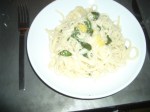
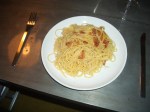
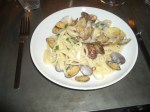
– bucatini con pomodorini e origano
– spaghetti al limone
– penne carbonara
– spaghetti alle vongole in bianco

these are some of the dishes i don’t cook. these dishes are the specialties of my husband’s, which he learned from this nice cookbook called “the river cafe cookbook” from a very famous italian restaurant in london.

it is like an unspoken rule between us that i wouldn’t dare touch them, as we both agree that it is the best this way so that we can avoid any feeling of rivalry between us (i.e. “who can make it better?” kind of remarks, which is very petty i know, but can be a critical cause of a big fallout). also, i realise that it is really nice from time to time that someone else stands in the kitchen and cooks something for you.

what i find very charming is that each time he cooks these dishes, he has to go back to the recipe even if he has made them numerous times in the past. every time he glares at the cookbook and follow the procedure very precisely or i should rather say very loyally (he worships the food there), concentrating very hard as if there is absolutely nothing else which can disturb him at the very moment.

i love to watch him cook. my favorite time of a day.

home

lately i’ve been having a hard time at work. the problem itself is very ambiguous, and i cannot specify what exactly triggered this feeling of perplexity. i often feel that i don’t belong there, and am not needed. perhaps it is coming from an accumulation of ongoing frustrations towards minor, yet a number of issues involved in my work life.

in such circumstances especially, it is a great relief to come home and to be totally away from the problematic environment (and i am truly grateful that it is not the opposite). on my way back home on my small bike, i looked up at our apartment window and saw a gentle orange glow inside. although the apartment was in an imminent distance, i couldn’t wait to get there. it was exactly the place i wanted to be, to unwind, fully relax, and most importantly, feel secure.

my husband is an architect and his job is to design & build houses. it is a great, admirable profession which contributes to the society in a larger context. he produces a physical place for dwelling where people start to build up their lives for years and years. but a house is still a practical tool and can be quite cold and soulless. only when it is filled with life, with intangible values such as comfort, leisure, peace and contentment, it finally starts to form a real “home”.

the rich aroma from a cooking pot, the sound of a kettle with boiling water, the warmth of your bed, the view of your laundry outside the window… these things seemingly so meaningless are the core essence to create a home. maybe i, no matter how insignificant i may feel from time to time in a professional life, can perhaps be an architect to build up a great home. i can finally feel that i am contributing. finally, i mean something, to someone, at home.

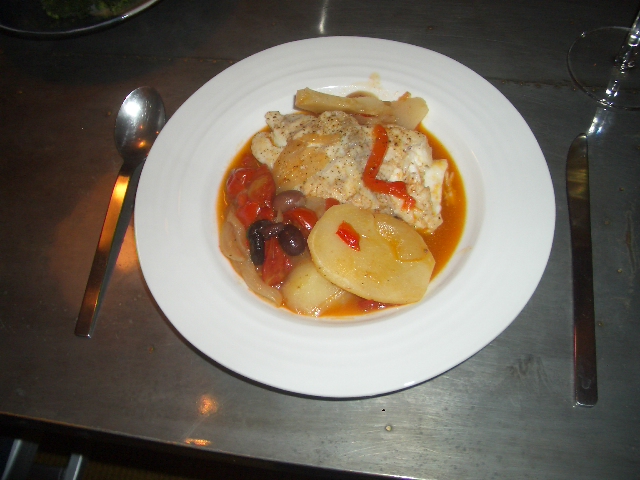
caldeirada de peixe (portuguese fish stew)

living in the central part of tokyo and being married to a dutchman have made the circle of my friends quite international. despite my nationality, from time to time i feel more comfortable being in a diversified crowd than being surrounded by a homogeneous group of people.

there are always great benefits being exposed to different cultures. of course sharing a variety of our culinary cultures is one of them. a while ago, a group of friends got together to teach/learn a typical dish of a country of each one of us. the first lesson was japanese, and at the second lesson i learned this dish, caldeirada de peixe (portuguese fish stew), from our lovely portuguese friend M.

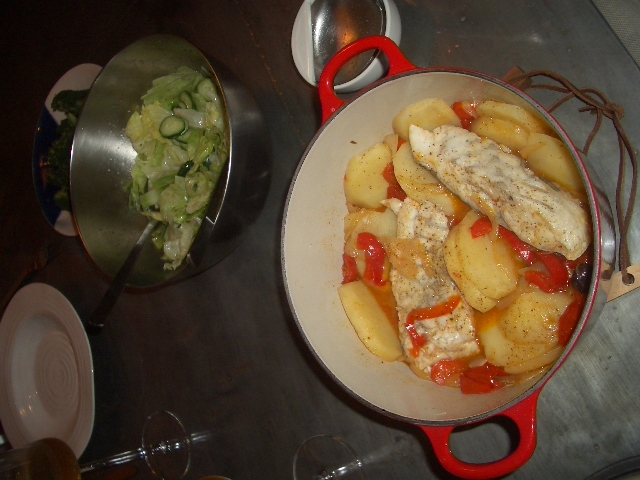
this is the only portuguese dish i can cook. the soup is made with sliced onion, sliced paprika, sliced potatoes, a can of tomatoes (i used a pack of fresh cherry tomatoes this time instead), and a few filets of fish (this time i used snapper, but can be salmon, cod fish, or any other fish of a similar sort), and several pieces of olives (if my memory is correct, i think she put some olives at the end). when M taught us this dish, she used salmon and added some prawns. i think prawns can be replaced with some other seafood, such us scallops or crams or squid.

the trick of this dish is the amount of olive oil (a lot) and the time to cook the sliced onion (long). i remember we finished a glass of white wine or maybe 2 glasses of it, while we were waiting for the onion to be ready. you just have to simmer it slowly and slowly, until the onions are very tender and transparent. after 2 glasses, you can pour the paprika, again cook it for a while, and then add tomatoes and simmer again for 5 minutes or so. add potato slices, simmer for another 5 – 10 minutes, and finally add the fish, olives and other seafood as you prefer. cook for another 5 – 10 minutes, and add salt & pepper to taste.

by the time the dish was ready, we were quite tipsy, chatty and very happy. one day i would love to visit portugal and try this dish in its home country. when that happens, i know i will be very proud of myself.

caldeirada de peixe (portuguese fish stew), its recipe through the courtesy of M.P. (obrigada!)

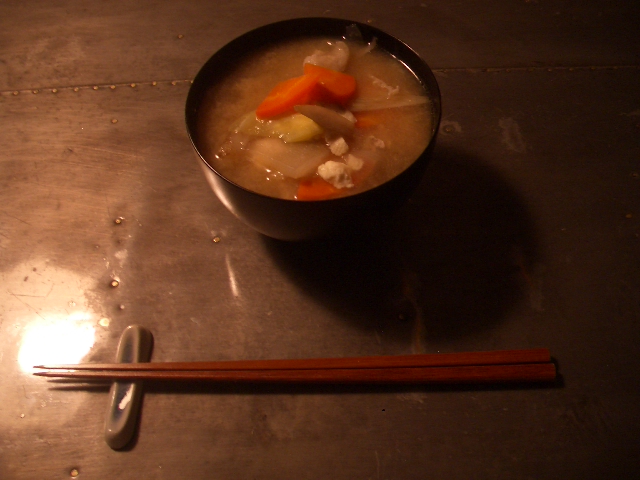
warmth of home – 豚汁 “tonjiru”

i didn’t have a good day at work. nothing serious, but it still made me down and took my energy away. the cool air outside with the smell of crisp brownish yellow leaves somehow reminded me of home, my parents home in the outskirts of tokyo where you can still find small vegetable fields beside a train track. all of a sudden i missed it so much. how comforting it was, despite occasional quarrels, disagreements and interferences, i was always protected, accepted and cared for.

i craved for something my mum had always cooked for us when we were little, my sister and i. once in a while from autumn to winter, she cooked a gigantic pot of 豚汁 (“tonjiru”, miso soup with pork), with a lot of vegetables and some pork meat. my mum grew up in the country side, in a mountain village, with 5 other siblings. the soup was perfect for a big family like that – it is very nutritious and easy to prepare, and most of all it tastes really good, containing the juicy essences from the vegetables inside. it’s basically an upgraded version of miso (soybean paste) soup, with lots and lots of root vegetables, tofu and thinly sliced pork pieces.

i actually never learned how to make it from my mum, nor have i got a recipe from her. after all it’s a very simple dish and how to make it is quite self-explanatory if you know how to make other miso soup, so i never bothered to ask her before. the funny thing is though, that the taste comes out to be exactly like hers.

豚汁 “tonjiru” (for 2)

1/6 of japanese radish (daikon) – “icho-giri”, triangle slices
1/3 of carrot – “icho-giri”, triangle slices
1/2 of gobo (burdock root) – “sasagaki”, thinly shaven
1 “naganegi” (leek), roughly sliced diagonally
1/2 of momen tofu (cotton tofu), broken into a mouthful size by hand
100g pork slices, cut into small pieces
1/2 tea spoon of dashi powder
1 liter of water
miso paste to taste (3 table spoons)

in a deep pot, put the water, the root vegetables and bring the water to boil. put naganegi and tofu, pork slices and dashi powder into the pot, again bring to boil. lower the heat, gently remove the layer of residue floating on the surface with a ladle, and simmer for 20 minutes or so. once the root vegetables become soft, put the miso paste in and have it melt by stirring, and simmer for another 5 – 10 minutes. adjust the amount of miso paste to your preference.

a bowl of tonjiru gave me an amazing level of security. it’s just miso soup but i felt at ease. i felt the warmth of home, deep inside my stomach.

dinner with friends – M & G

one saturday evening, we had a special couple over for dinner at our home. they are the reason why i met the love of my life, and i hope he feels the same way, and both of us are never be able to thank them enough.

it feels so special that we are all in tokyo, at this phase of our lives, all with quite different background, let alone our nationalities, but something always puts us together – and at one point i realised that it was food. the 4 of us have an incredible appreciation towards food. the couple are from portugal, and i remember their telling us once that whenever they go on a holiday back home, they always come back with a suitcase full of food – salted cod fish, cheese, hams, port… i used to do exactly the same when i lived abroad. coming back to tokyo with 2 – 3 bottles of good olive oil, or leaving tokyo with a few packs of udon noodles and natto paste…

cooking my comfort food for them was a tremendous pleasure for me – i reckon that it is quite rare for them to be invited to a japanese house (well, mixed, but close enough), and thought it might be a good idea to go totally local. the dishes i cooked for this special evening were very ordinary japanese home cooked meals.

as starter dishes, i made

冷や奴 (hiyayakko, “cold tofu”) – fresh tofu with sliced veggies such as leak, cucumber, myoga, etc. with soy sauce
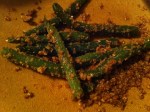
いんげんのごま和え (ingen no goma-ae, “green beans in sesame paste”) – boiled green beans, ground sesame, sugar & soy sauce
あさりの酒蒸し (asari no saka mushi, “steamed crams in sake”) – crams, salt & sake

the main course was しいたけの肉詰め甘酢あんかけ (shiitake no niku zume amazu an-kake, “shiitake mushroom and meat stuffings with sweet sour sauce”). this time i used minced chicken with chopped ginger, leek and stalk of the mushrooms. the sauce is made with vinegar, soysauce, “mirin” sauce and katakuri powder (starch) to give it a thickness.

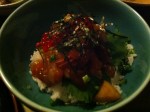
and in any japanese course menu, there is always a 〆の一品 (shime no hitoshina “a dish to top it off”) with some carbohydrates. for this occasion i made 刺身タルタル丼 (sashimi tartar don), with ikura (salmon egg roe which look like orange pearls), to make the dish more luxurious than usual.

for a dessert, we had M’s famous chocolate mousse – she does the best chocolate mousse in the whole world – that they brought especially for this occasion (my husband dies for this chocolate mousse).

no 3-star restaurant can beat a home cooked dinner with friends & family like this one tonight, and our thanks go to M & G.

close-up photos provided by M (proudly taken on her new iPhone G4 😉 )

海鮮焼麺 seafood chow mein

i love improvising dishes using leftover ingredients from previous days. i love it even more when my attempt works out well.

the idea of this dish came from leftover fresh noodles (for stir fries) and some cabbage. i didn’t want to use the ready made powder which comes with the noodles to give out the taste of worcester sauce, and wasn’t in the mood for using pork slices i normally use for stir-fry noodles. ok, i thought, maybe i should be a bit more adventurous this time, and grabbed a big squid and a pack of crams at the shop and rushed out of there to head back home.

in our kitchen, the battle started with the squid. it needs to be cleaned with running water, skinned, and then gutted (unfortunately i broke the ink bag, so it went straight down the drain…). i asked for my husband’s help, who is equally inexperienced with any type of fish, letting alone cooking it. when pulling out of some soft bones from the squid, we held the flesh from both sides with our eyes closed at the same time, quite not getting what exactly we should be doing. not sure if we followed the right routine to clean a squid, but it finally started to look edible.

after the squid fight, the rest of it seemed quite easy. stir-fry chopped garlic & chili pepper with vegetable oil, put crams in, and when the shells start to open put the sliced squid, and after 10 seconds or so pour in a half cup of sake (rice wine). i did this thinking it could remove the overly fishy taste out of the dish. put salt & pepper to taste, and put it aside.

in a different pan put more oil, this time stir-fry onion, kōngxīncài(空心菜), and cabbage. after a few minutes, put the noodles in, and stir-fry for 2 more minutes or so. when the ingredients in the pan get mixed, add the seafood which was put aside earlier, and a bit more salt & pepper to taste. at the end, pour in some oyster sauce & nam pla (thai fish sauce) from the rim of the pan. lightly stir up all the ingredients before putting off the heat.

sprinkle some chopped chives & green (i used leftover trefoil, 三つ葉)over the noodles before serving.

the dish from the sea, satisfied our taste buds greatly, worth the battle.

tagliatelle bolognese

september is half way, and it is finally getting cooler in tokyo. one day we had typhoon coming towards the island of japan, and after buckets of rain, the temperature dropped quite significantly. for the past few days i can feel the gentle, autumnal chilliness which my body remembers from a year ago. despite the rain outside, the humidity seems to be much less, and the cool breeze so comforting.

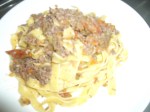
for the first time in months, we opened a bottle of red wine – today’s dinner is tagliatelle bolognese, cooked with a generous portion of the wine coming from the same bottle.

this is my old recipe. i’ve been cooking the same sauce for the past 8 years or so. i discovered it in one of the italian cooking books i had, and changed here and there as i have done my trials & errors. here are the ingredients i use for the bolognese sauce:

3 table spoons (or even more maybe) of extra virgin olive oil
1 clove of garlic (chopped)
3/4 of onion, 1 celery, 1/2 carrot, fresh rosemary, all finely chopped, or put in a food processor altogether
300 – 400 g of minced pork/beef (mixed)
1+ cup of red wine (or generous pour directly from the bottle!)
10 – 15 cherry tomatoes
a lot of ground pepper
1 – 2 tea spoon of salt

the tip of this sauce is to simmer the vegetable in low heat for 15 – 20 minutes (this way it gives some sweetness to the sauce). then add meat, put the flame up to medium heat, cook it for a few minutes until the meat is brown, then pour the wine, put the halved cherry tomatoes, put the lid on, lower the heat again to minimum and simmer again for at least 30 minutes. add salt & pepper to taste at the end. after turning off the heat, it’s even better if you can leave it for 1 – 2 hours for the taste to settle, and reheat before serving. the ingredients above should serve 4 people at least.

i sometimes make the double portion of the sauce, first to eat with tagliatelle or penne or rigatoni, etc., and then a few days later i make one of my signature dishes, lasagna (i hope to upload the recipe sometime in the near future).

tagliatelle bolognese reminds me of italy, especially the central part of the country – bologna, of course, where the dish was originated, firenze, siena, roma… whenever i miss the beautiful landscape and their delicious cuisine, i prepare this dish as if to compensate the missing piece of la dolce vita.

カレーライス curry & rice

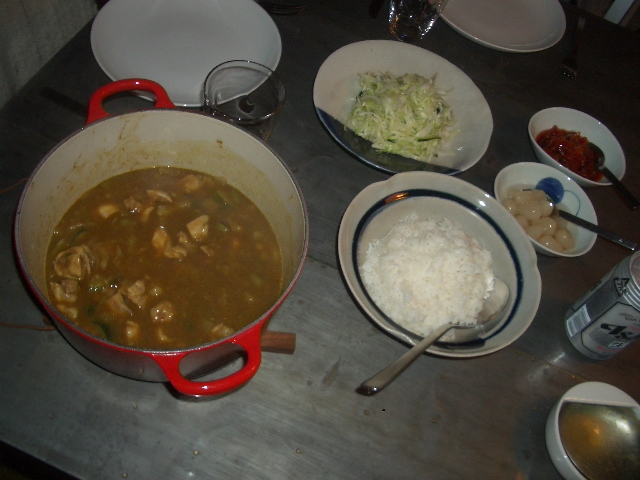
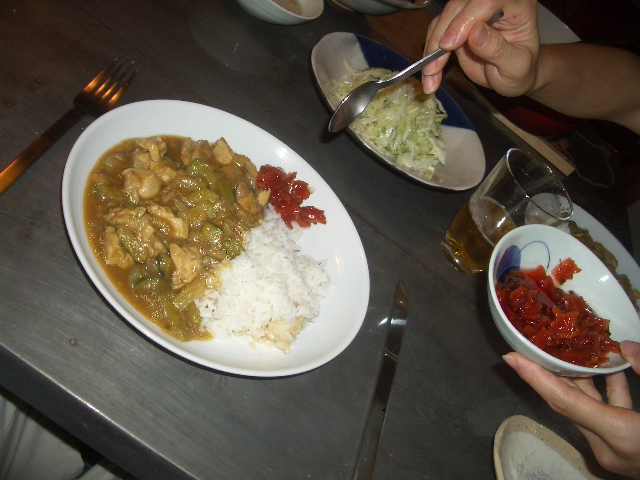
this is japanese curry & rice. in fact, the majority of japanese people love this dish. it is one of the dishes in japan, in my opinion, that you would think about cooking for your boyfriend for the first time.

we don’t make curry paste from scratch actually, but use curry blocks instead which melts into the broth. you can get the blocks in any grocery store, and there are at least 10 different brands, each of them offers “sweet”, “medium spicy” and “spicy” tastes, lying next to each other on a big shelf. i know it’s a bit like cheating, but that’s how our mums & grandmas have traditionally made the dish all along (i don’t think it goes back to my great-grandmother’s generation though). it’s so handy that people make curry all the time, which is probably very different from what non-japanese people would imagine what we would make at home. we vary what to put in the broth, for example this time i used chicken, onion, zucchini and celery.

the red stuff i am putting on the dish is called 福神漬け, fukujin-zuke pickles. the taste is sweet & sour, goes very well with slightly spicy curry sauce. it is always, always served with the japanese style curry & rice: the-curry-wouldn’t-be-the-same-without-it, kind of thing. this one too, we don’t really make at home, but buy ready-made one at a grocery shop. the colour is dreadful, but picturesque (no?).