Category Archives: cultural differences

food for thought – breast feeding crisis

Breastfeeding… I won’t hide it. I had a very tough, miserable, agonizing time with it… My imagination for a blissful motherhood collapsed at the moment my baby sucked my breasts for the first time a couple of hours after she was born.

Prior to giving birth, I took breastfeeding for granted. I have a younger sister who had her first child at the age of 25 and the second one two years after, all the while I was still searching for my better half. She breast-fed her kids entirely, saying she was grateful because it was much more economical than buying formula (she was quite indifferent about the method of feeding – whatever worked, worked for her). I remember being literally stunned at the sight of my sister’s super engorged breasts (they looked like a couple of gigantic grapefruits), and her babies going into breastmilk coma after voraciously sucking their mommy’s breasts for (only) a few minutes. Her breasts were the best tools (or sometimes in Japan we refer them as “weapons”) for her kids’ development and their well-being. I thought it was totally normal for mothers to produce breastmilk like my sister. And she was MY sister. We have the same parents, grew up together eating the same food, and have the most similar genetic characteristic in the whole wide world. During my IVF treatment, it even came to my mind that I’d ask her for her eggs if mine were not good enough (but the thought quickly dismissed because of the restrictions under the current Japanese law). So when I gave birth to our little bundle of joy almost a decade later, it was only natural to me that I would expect the free flow of breastmilk. How could I not?

The hospital where I delivered my baby was pro-breastfeeding (later my husband called them “breastfeeding nazis”), and offered me handful advices on what to do. They taught me how to let the baby suck my breasts by tightly holding her delicate newborn head and fiercely pushing her face onto my breasts. They told me to have the baby suck my breasts as much as possible, whenever she cried, wherever there was a chance. No routine, just let the baby guide you. For the next few days I strictly followed their instructions and did all my best… but the milk didn’t come, maybe a teeny-tiny bit but not enough at all. As a result she not only lost more than 15% of her birth weight, but had a high fever due to dehydration. By the fourth day after the baby was born I was exhausted and was on the verge of a nervous breakdown. With my tearful and my husband’s angry protest, the hospital finally agreed to give her a bit of sugar water. The next day, after another round of emotional protest from the distressed first-timer parents, they decided to let us feed her some supplementing formula, but not from a bottle but a glass, in order to avoid nipple confusion. I never forget the sight of my newborn baby girl crying tirelessly for milk with her excruciating voice with her face so red and wrinkly, while i was helpless, pathetic and completely at a loss. It was utterly different from my earlier image of happy motherhood. By the sixth day and the last day at the hospital (I stayed there longer because of my C-section), the baby regained her birth weight with the help of supplementing formula, and to my relief we were finally discharged. With the memorable kick start of my breastfeeding experience, the agony continued. By the time we settled back home I was totally brainwashed, with the thought that I was a complete failure being unable to feed my baby entirely with my own breastmilk. I was sad, lonely, angry and exhausted. Thinking back, I was on the edge of postpartum depression, and it took me a while to truly connect with my baby girl.

Knowing my frustration, my family and close friends gave me many tips in order to boost my supply. My mom. She advised me to eat white rice, especially the sticky one, as well as root vegetables, because her mother, my dear grandmother, did so, and believed this helped her fully breastfeed six children including my mom and on top of that wet-nursed some babies in the neighbourhood. My sister. Her advice was to drink a lot of mixed vegetable juice (like a 1000ml everyday), which she learned from the hospital where she gave birth to her two children. My best friend. She said it had worked for her to pump her breasts every time after feeding, because the body thinks it needs to produce more, and hence more milk production. As gullible as I was, I even bought (check this) an “electrical” pump to do so. With the level of my supply it was a total waste of money, but I tried desperately. To me all of these suggestions seemed convincing at that point of time, because after all these women succeeded in breastfeeding their babies. I followed the advices, ever so painstakingly, for my baby girl. The only thing I could do was to give it a try. If you try hard, you usually get a (good) result, which I had learned while growing up. As such, I forced myself to eat, drink, rest, breastfeed, supplement with formula and pump. The outcome? No difference whatsoever in my breastmilk supply, but an increase in my weight and waist line (wait, was I not supposed to loose them after childbirth?), my face turning embarrassingly orange due to the mixed juice I drank everyday (one of its main ingredients was carrots), and the not-at-all-useful electrical pump tacked away in the cupboard. When I noticed what had actually happened, I was disappointed, furious, and most of all, unhappy.

Even so, as brainwashed as I was, I kept combo-feeding my baby for the next five months and went through all the other possible ways for improvement, including frequent visits to a lactation consultant. She kept saying my supply would improve so no need to increase the amount of supplementing formula, but my poor baby girl was not gaining her weight. Her weight was always around the bottom or out of the lower percentile. Whenever I met up with my fellow glorious breastfeeding mothers I felt inferior. They innocently commented on my baby girl that she was so small, most likely thinking it had something to do with the baby’s inability to eat well. No, that wasn’t it. The fact was I wasn’t giving her enough food, either breast or bottle. It hurt me and made me feel discouraged and shameful. I should have stopped that nonsense and just switched to fully bottle feeding, but with my brainwashed state of mind, I stubbornly kept trying in vain.

It was when she turned six months, one day, all of a sudden, my little girl refused my breasts. She screamed her head out by arching her small body up and down, kicking and wriggling vigorously whenever I tried to let her suck my breasts. She had enough of it and was righteously fed up. It was just ridiculous, especially to her. So this time, I gave up. Sticky rice, veggie juice, electric pump and lactation consultant. Dumped them all. A hint of sentiment passed my mind to give up something I’d committed for months, but I was relieved. I felt emancipated, somehow triumphant and strong. I felt so powerful that I stopped breastfeeding all at once, even pumping also. It was high time I was released from the six months of misery, and now things were supposed to turn into the start of a new, happy phase of my motherhood. And what did I get? I got mastitis! Had no idea one could get mastitis even without enough supply. No one ever told me that…

OK, time to move on… there are other great things out there you know… like… solids!
food for thought – pregnancy 

it took us a a while and quite some effort getting pregnant with our little one. so when i finally got pregnant, i was naturally, maybe a little overly, cautious about what to eat. i read some articles about what to and not to eat during pregnancy, and heard about friends’ experiences and diligently followed those advices.

surprisingly enough to some people, i ate sashimi, raw fish, every now and then during my pregnancy amongst other seafood. the japanese guideline states that pregnant women can eat raw fish occasionally as long as they are fresh (fresh in the japanese context, which means “super” fresh in the global standard i believe). i avoided eating large-sized fish from sea water such as tuna and sword fish, as they allegedly carry certain amount of mercury. also i avoided shell-fish, since i thought there was higher risk to get food poisoning, but this is not backed up with a clear scientific research.

my hong kong chinese friends told me that in chinese culture you are not supposed to eat any sort of seafood during pregnancy, raw or cooked…. hah, i’m so glad i wasn’t in china while pregnant. i love fish and seafood in general, and it would have been a torture if i couldn’t eat any of it for months. actually, there appear to be a lot of food you are not supposed to eat in the chinese culture during pregnancy, including seafood, many types of fruits, certain types of tea, and not even cold water since it is considered to lower your body temperature. woah, very strict!

in italy, i learned they don’t encourage pregnant women to eat cured ham, such as prosciutto, salami, etc., as well as certain types of cheese because of some bacteria they carry. well, if you think about it, it makes sense. just like avoiding raw eggs for salmonella i guess.

another friend (american/italian) told me that they avoid eating salad leaves. as far as i remember, it was because the water used to wash salad leaves may be contaminated…? well, this makes sense if you live in developing countries where tap water is not potable, or even in japan when we had nuclear meltdown scare… but it didn’t really occur to me during my pregnancy, and i ate salad on a daily basis. i am glad that i did not find this out before i delivered my little one!

but the most rewarding and interesting for me to learn was when i was in south of france for summer holiday visiting my best friend and her partner during my pregnancy. we were having dinner at the back garden of the house we were staying, and the host served us the famous and luxurious “pata negra” ham from spain for appetizer, along with a glass of rosé, the popular summer drink in the region.   ….and of course i wasn’t touching any of it. i did explain why not, and the host (a bit reluctantly) accepted the reasoning. however, as they drunk a bit more wine and got more tipsy, my friend’s partner started to explain us about his frustrations with the theory of this food restrictions for pregnant women. they said in france anything can be accepted if you eat in moderation, and the most important thing in pregnancy (or even in general) is to enjoy food rather than being scared or worried about it. this goes to wine also, it doesn’t harm if you have a sip (or probably he said “glass”) or two. he claimed, “what is there to enjoy, if you can’t enjoy food and drink in life?”

i know there are people who would go totally against the french way, but considering all the stories i’ve heard and learned, i realised there is no right or wrong answer to this – the best thing is to follow what you feel most comfortable with. otherwise, you’d get lost in the flood of information and different beliefs which vary in each culture. just trust your gut feeling, and enjoy.

bento for the little one (udon noodles – 28 jan 16)

menu:

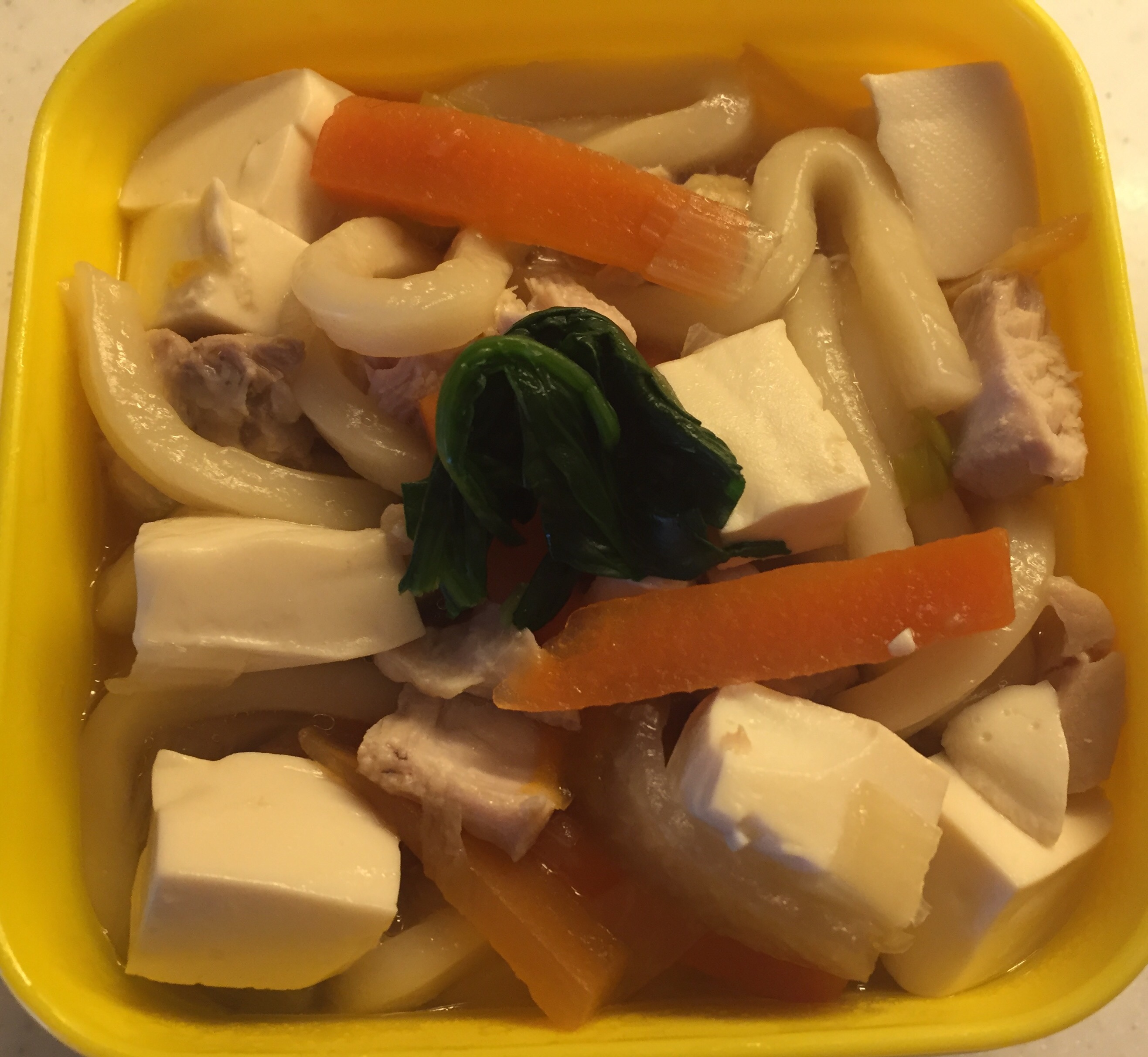
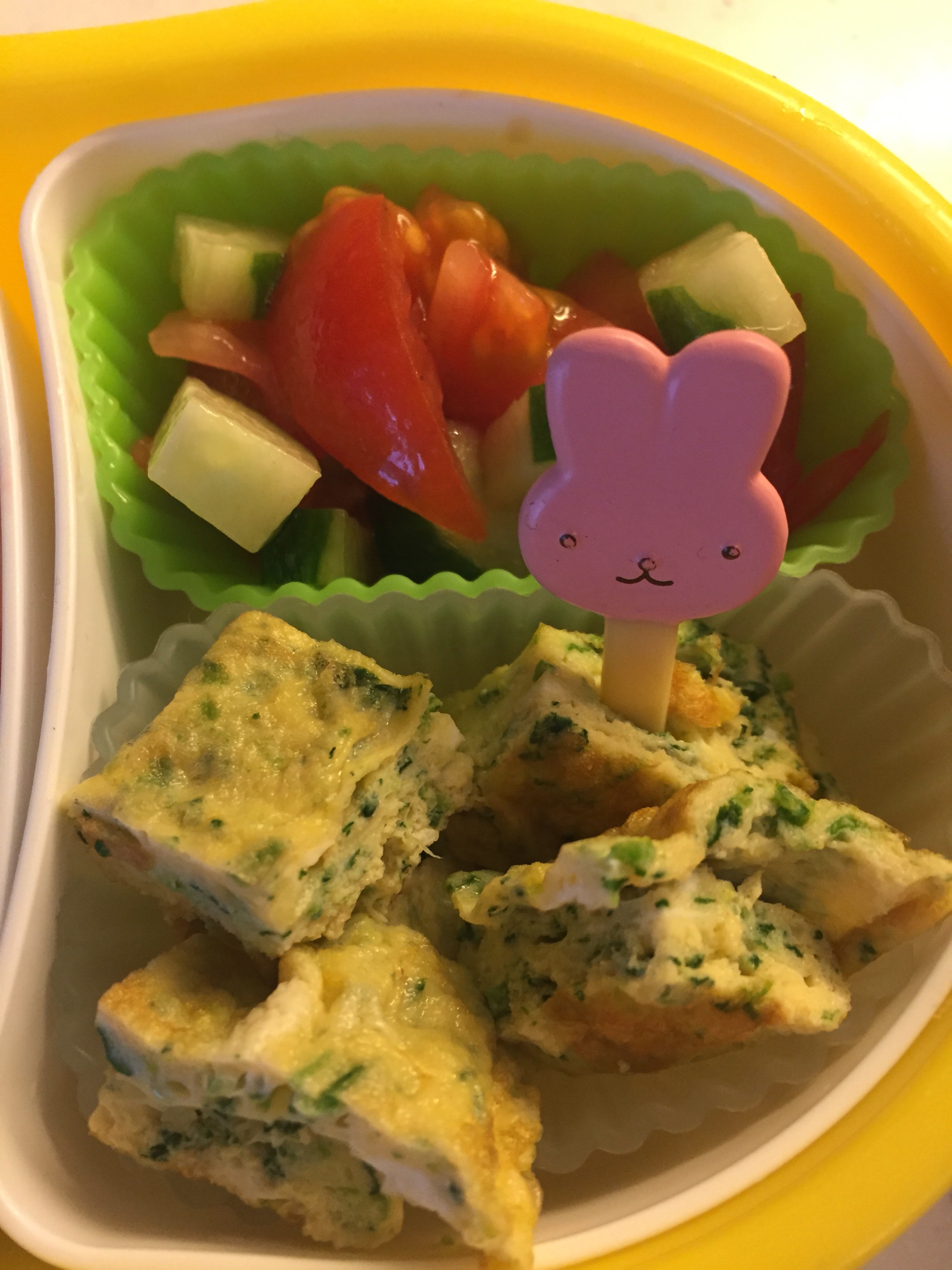
udon noodles with chicken & tofu, spinach egg omelet, tomato & cucumber salad

organic grape jelly (bought at a shop) & fresh strawberries for dessert


today, LO is back at daycare after staying home for a week because of a flu. we say that udon (japanese noodles made of wheat flour) soup noodles are good for digestion and often eat them while being ill. i remember my mum’s udon – simple but tasty and gentle for your stomach… my comfort food. i just cannot bring myself to feeding my little one a cracker with a slice of cheese when she is ill, while it is what my husband (he’s dutch) craves when he doesn’t feel well. cheese is one of the last things to come to my mind… but i know this goes way back to your childhood and is deeply rooted to your senses… it’s funny how cultural differences can be discovered so randomly in situations like this. i wonder how our LO’s tasting pallet develops as exposed as she is to such versatile choices of food.

udon soup noodles (serving for 4)

ingredients:

– 400g udon noodles (store bought)

– 800cc – 1,000cc japanese fish broth

– 1 small (or 100g) carrot (thinly sliced, roughly into 1cm x 3cm rectangular slices)

– 100g daikon, japanese radish (thinly sliced, roughly into 1cm x 3cm rectangular slices)

– 15cm japanese negi/ spring onion, roughly sliced

– 100g chicken thigh (cut into small bite pieces)

– 1/4 of fresh tofu, diced

– 2 table spoons of japanese sake (can be omitted)

– 1 tea spoon of salt

– 2 – 3 table spoons of say sauce (start with 1, and add to your liking)

– 1 – 2 table spoons of japanese mirin (alternatively, just a pinch of sugar)

– for garnish & extra colour, chopped japanese mitsuba leaves or cooked spinach or thinly sliced leek

directions:

1. in a medium sized pan, pour the broth and put carrots, daikon & leek slices and bring them to boil.

2. lower the heat but keep it boiling, and gently remove any residue coming up to the surface

2. add chicken and boil for another 5 minutes or so. make sure to remove residue

3. once carrots & daikon are soft, add sake, salt, say sauce and mirin to taste. make sure that soup tastes to your liking here

4. add udon, brings the soup to gentle boil, lower the heat and cook for another 3 – 5 minutes or so (depending on the thickness of the udon)

5. add tofu at the very end, stir gently so that tofu gets warm

6. place the soup and noodles in a deep bowl, place the garnish at the center

escape

for the past weekend, due to my husband’s work, i had a chance to go along with him to shimoda, the southernmost point of izu peninsula in shizuoka prefecture, south west of tokyo. his (and his partner’s) architectural office has been commissioned to work on a resort development project down there by the shore. after a 3-hour train ride from tokyo main terminal, we arrived in the small town of shimoda, where all the chaos we encounter in our everyday urban life seems to be nonexistent.

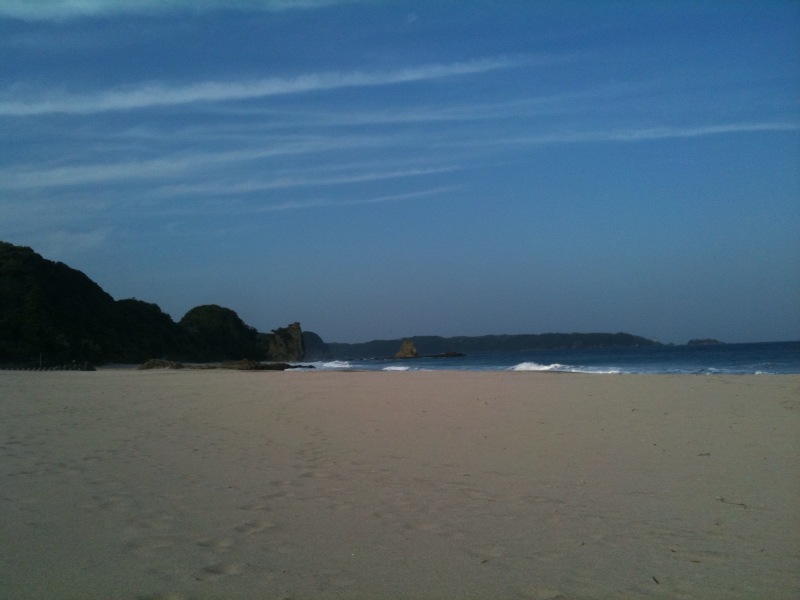
while they went for a walk-through on the site with the client, i went alone to an almost deserted beach nearby. at the off-season beach, there was hardly anyone except for a few surfers, despite the lovely weather with amazing sunshine and gentle sea breeze. it was literally a paradise and a perfect get-away to me.

sitting alone on the white sand, looking at the waves, feeling the breeze softly touching my cheeks and hearing the sound of ripple in the back of my head, i started remembering how much i had craved for being where i was that day.

i grew up in a small inland city of japan where the city/prefecture boarder did not touch any ocean. the city is surrounded by the mountains, which creates a quite protective mentality in its inhabitants. naturally people are very conservative, and they don’t seem to know that you can have different views. mostly because of it, i always felt captured and oppressed, wanting so much to escape to somewhere out there, with more potential in life, with more exposure to the outside world. in some place yet to be seen, i used to think, there must be a perfect location where i completely fit in. by being close to the sea or a river or a metropolitan city, i believed that i could get out anytime, to anywhere i wanted to go. by the time i hit my adolescent period, the feeling got stronger and i often dreamed of putting myself to a bigger scale of the world, hoping that such place would exist, where i would feel fully satisfied at last.

with a twist of fate i left my suburban city shortly after that, and from then on i moved around the world. in america i lived by the atlantic ocean, and in australia i lived next to the tasman sea. in the u.k. i lived in london which is considered to be one of the biggest cities in the whole world. in italy i was in milan, where i had an easy access to travel freely to anywhere in europe. in theory i had a perfect environment, but i am not sure if i can truly admit that i was entirely happy and that my life turned out to be the one i had always wanted. because wherever i went, wherever i traveled, i always, without any failure, started missing my family and longed for intimacy. what i had thought was an escape became a torture, and every time that happened i resigned to my emotional craving and came back to my comfort zone.

my mind drifted back to the deserted beach when i heard my husband’s footsteps, and i realised what a pleasure it could be to have a place to escape, when you knew for sure that there was a place you could go back to, to something real and truly genuine. after all it is not a physical location which makes you feel fulfilled. i can say it now that it is more of an emotional well-being which dictates the level of your fulfillment.

a vast landscape of the ocean extends in front of me, but i don’t have any desire to escape now – i love my life now, and i know it for sure.

being japanese

2 months have past since the Tohoku/Kanto earthquake on 11th of march 2011. the terrain seems to have calmed down finally (at least in Tokyo), and our life is almost back to normal. i still get a bit sensitive from time to time, whenever our furniture makes some squeaky sound or the apartment gets vibrated slightly from a truck passing by our street. when that happens i get tense for a second, but resume my daily life right after. most of the time i spend a day without thinking about the threat from the ground, which is a great relief.

given the impact of the disaster, the earthquake and the incidents occurred around it have been and are still, quite naturally, the main topics at the dinner table. for the past couple of months, i have noticed cultural or maybe personal differences in a variety of occasions. it is not about right or wrong, but just different. there are too many examples to tell, but these things can be summed up to the very basic ideas of human behaviour as follows:

– a virtue of perseverance vs. a spirit of survival
– compassion towards the problems, or discrimination against the problems
– surrender vs. confrontation
– acceptance vs. denial
– conformity vs. individualism

under the extreme circumstances of the disaster, i have witnessed these fundamental differences in people’s mindset, and realised how much influence we are prone to get depending on where you grow up, how you are brought up, and whom you grow up with.

as mentioned earlier, i believe there is no right or wrong in whichever you react. it’s just the differences in mentality and values which are built on years and years of history around the world. one thing i can say is, being a native of a mono-cultural society, we are expected, by our fellow country people, to act in certain ways to conform to what the society believes in. in such environment, sometimes it can be hard to have differences in opinion, especially when you are exposed to a multitude of ideas and are surrounded by a diversified group of people.

being among different cultures, ethics and ideologies, sometimes it gets pretty confusing in regards to what i should or want to have faith in. of course i am proud to be japanese and love our culture dearly, but on the other hand there are certain ideas that i do not agree to, but i find it hard to voice it. i am afraid of not being accepted, and am scared of being regarded as a traitor. perhaps this characteristic itself is the most japanese quality that i possess and try so hard to disguise.

i don’t know how to finish this essay, as i guess there is no relevant answer to what i am questioning. ok, i sign off here, will let it lie and observe…